.jpg&w=3840&q=75)
The Hawks Swore Off Shortcuts. Then Austin Reaves Became Available.
Three weeks ago I wrote that the Hawks chose development over acquisition when they passed on Giannis. I believed it. I still might. But the morning after The Athletic reports Atlanta has interest in paying Austin Reaves $40 million a year, I need to sit with what that means for everything this franchise just told us about itself.
There's a move in Atlanta's music industry that producers talk about when they think nobody's recording. You build a sound from scratch — layer the drums, find the sample, shape something that belongs to you — and then right before the session wraps, someone walks in with a feature verse from an artist who's bigger than the song. The verse is good. The verse might even be better than what you had. But the song stops being yours the moment you drop it in.
The Hawks are staring at that moment right now.
The Contradiction
On May 3, I argued that passing on a Giannis trade was a philosophical declaration — the Hawks had the assets, Fischer's reporting was credible, and they chose not to because acquiring a superstar would reorganize the franchise around one player, which is exactly what they escaped when they traded Trae Young. I wrote the word "identity" and I meant it.
Now Woike and Amick report the Hawks have interest in Reaves — 23.3 points, 5.5 assists, 64.1% true shooting, and by every credible account, a player who wants to stay in Los Angeles alongside Luka Doncic.
So which is it? Is the front office that told us patience was the plan now chasing a $40 million guard from a team that just got swept by OKC? Or is there a distinction between trading your core for a 31-year-old superstar and signing a 28-year-old creator in free agency?
I think the distinction exists. I'm not sure the Hawks have earned the right to claim it yet.
The Kuminga Cost
The cap math makes the philosophical question concrete. Johnson's $30 million and Daniels's $25 million are locked in. Alexander-Walker, Kispert, the draft picks — all committed money. The only way to open $40 million in space is to decline Jonathan Kuminga's $24.3 million team option and let CJ McCollum walk.
This is where it gets personal.
In March, I wrote about Kuminga's arrival from Golden State and called him a joy player — someone the Hawks' system was unlocking in real time. The $24.3 million option was supposed to be, in my own words, the most honest decision of the summer. A referendum on whether the front office weighs playoff performance against potential.
Declining that option to chase Reaves ends the experiment before the data is in. Kuminga played 36 games in a Hawks uniform. He dropped off late in the series, but so did everyone when the Knicks' adjustments took hold. Moving on from him four months after acquiring him would be the franchise departure pattern in miniature — the thing I've been tracking all season. Pettit to Dominique to Mutombo to Horford to Millsap to Trae, and now possibly Kuminga before his story even has a second chapter.
The development identity means something or it doesn't.
The McCollum Evidence
But let me argue the other side, because the evidence is sitting right there in the box scores.
McCollum's playoff scoring arc tells the whole story: 26, 32, 23, 17, 6, 11. Hart figured him out by Game 3, and by Game 5 the Hawks' secondary creator was functionally erased. Not slumping — solved.
That collapse is the strongest argument for Reaves. A team built on collective creation still needs someone who can get a bucket when the system gets dismantled. Johnson isn't that player yet at 24. Daniels is the defensive heartbeat, not the scoring answer. Alexander-Walker had a breakout year at 20.8 per game, but he thrives inside the system, not outside it.
Reaves is different. He put up 23.3 points as the number-two alongside Doncic, operating in pick-and-roll, off the dribble, in the mid-range — the exact zones that went dark when McCollum faded. He's 28, which fits the timeline. He's efficient — 64.1% true shooting, 49% from the field, 87.1% from the line. The kind of player who answers the question the Knicks asked and the Hawks couldn't.
The McCollum decline makes the desire rational. It doesn't make the pursuit likely.
The Asymmetry
This is the part that feels most like Atlanta to me.
Reaves has shown no public interest in leaving. Doncic has told the Lakers he wants Reaves as his long-term running mate — specifically enough that he reportedly doesn't want Reaves included in any trade package, including one for Giannis. The Lakers have "no fear" of losing him and plan to offer five years north of $200 million. Rival teams are capped at four years and $178.5 million.
The Hawks would be offering less money for fewer years to a player who wants to be somewhere else. Atlanta knows this feeling.
The city has always had a complicated relationship with Los Angeles — not rivalry, more like gravitational awareness. Atlanta builds something; LA offers a bigger stage. Atlanta develops talent; LA provides the spotlight. It happens in music, in film, in culture broadly. And now it's happening on the cap sheet.
Utah wants Reaves too, per the same report. Two mid-market teams reaching for a player whose heart is in Hollywood. An audition where the role has already been cast.
What I'm Actually Asking
The question isn't whether Reaves is good enough. He is. That efficiency would transform the Hawks' halfcourt offense and give Snyder a secondary ball-handler who doesn't evaporate under schematic pressure.
The question is whether pursuing him contradicts the identity this team just spent a season establishing. The Hawks went 46-36, their best record since 2015-16. They produced back-to-back Most Improved Players. They built a system that made them genuinely dangerous. And then the gap between what they are and what they need became a 51-point elimination game.
Pursuing Reaves complicates the Giannis declaration, but maybe it doesn't contradict it. Giannis would have required trading Johnson and reorganizing the franchise around a 31-year-old. Reaves would cost cap flexibility and Kuminga's potential, but he'd slot into the existing structure — a piece that fits inside something already humming.
The difference between acquiring a star and signing a complement is real. Whether this front office can thread that needle — chasing a $40 million player while maintaining that they believe in patience — is the test.
The Reaves interest is the first offseason decision that makes me wonder whether they trust what they built. Not because wanting him is wrong. Because wanting him means admitting what they have isn't enough — and that admission has a cost beyond the cap sheet.
The lab is still open. The question is whether they're finishing the record or bringing in a feature.
Soundtrack: "Cranes in the Sky" by Solange
The Tilt
The Hawks said patience was the plan. Chasing a $40M guard who wants to stay in LA says otherwise.
— Simone Edgewood
What's your take?
Keep Reading
Everybody Kept Their Old Job
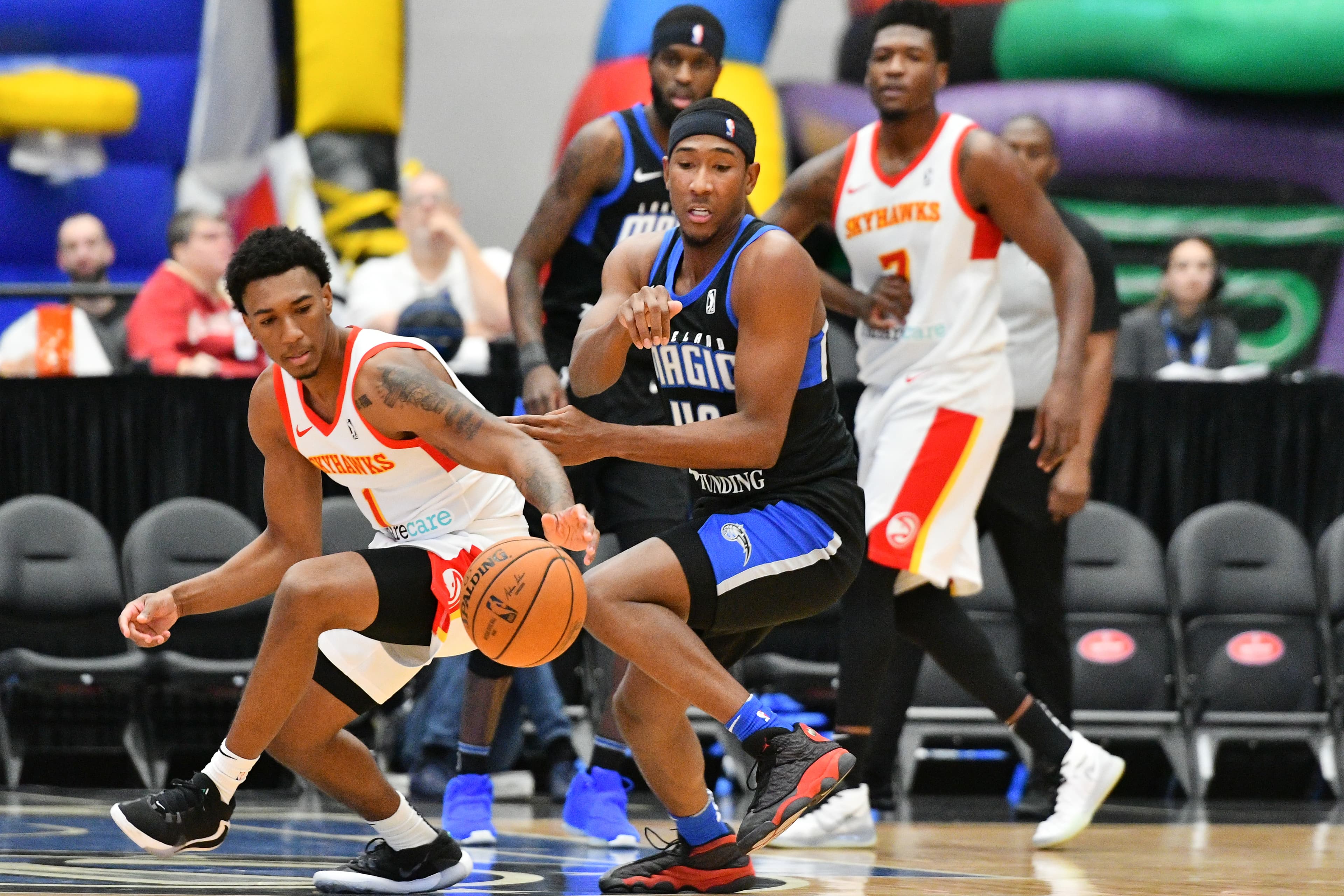
The Hawks handed the College Park Skyhawks a new general manager, a new head coach and a first-ever associate head coach on Wednesday, and none of the three gave up the job they already had in Atlanta. Two of them used to play there.
Nobody Else in the Sentence
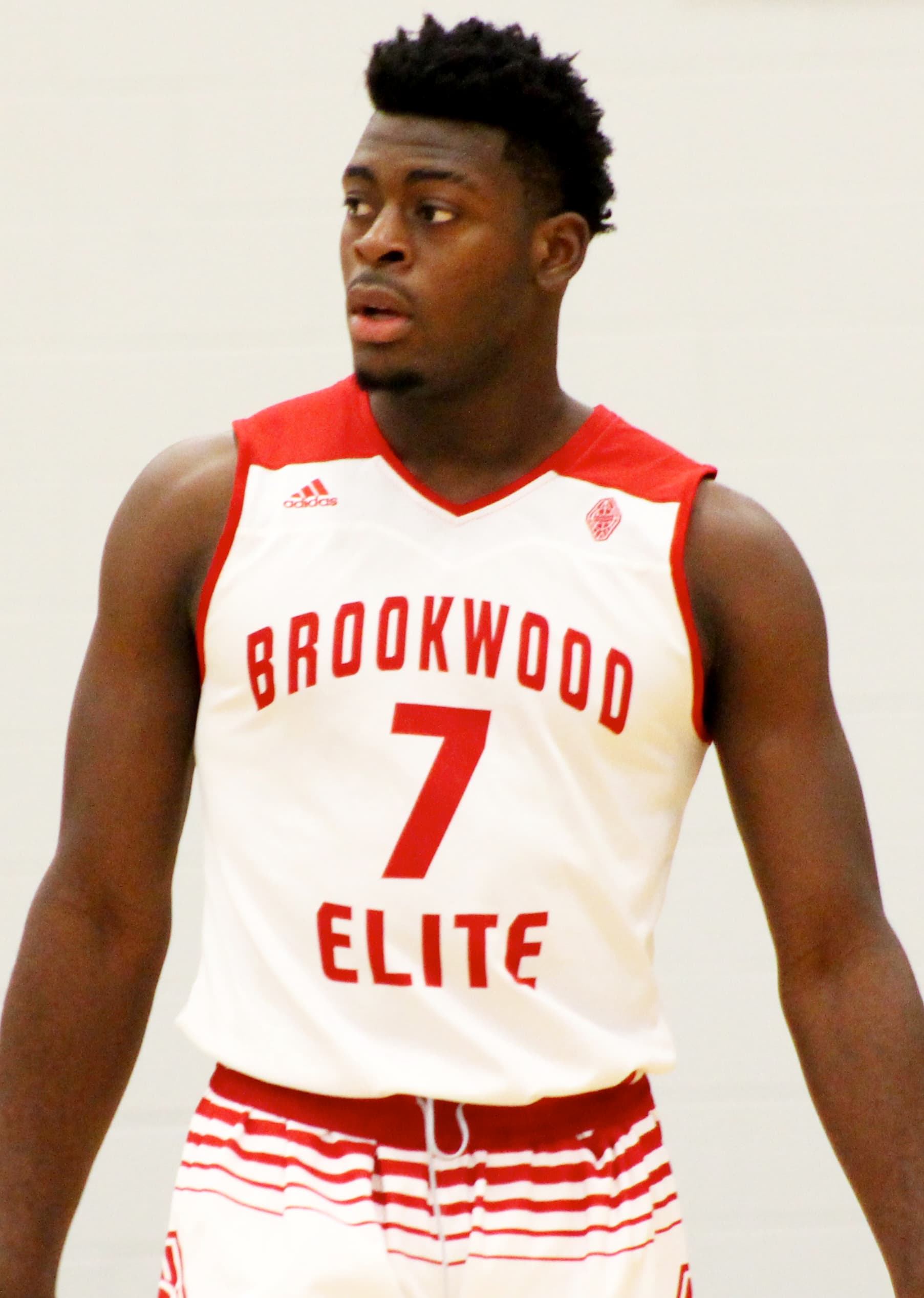
Yesterday I asked whether anyone would ever describe this Hawks team without naming another franchise to finish the sentence. It took one night, and the answer came from a player who has not practiced here yet, in a gym in Quebec City, in nouns nobody writing previews has access to.
Built Against Somebody
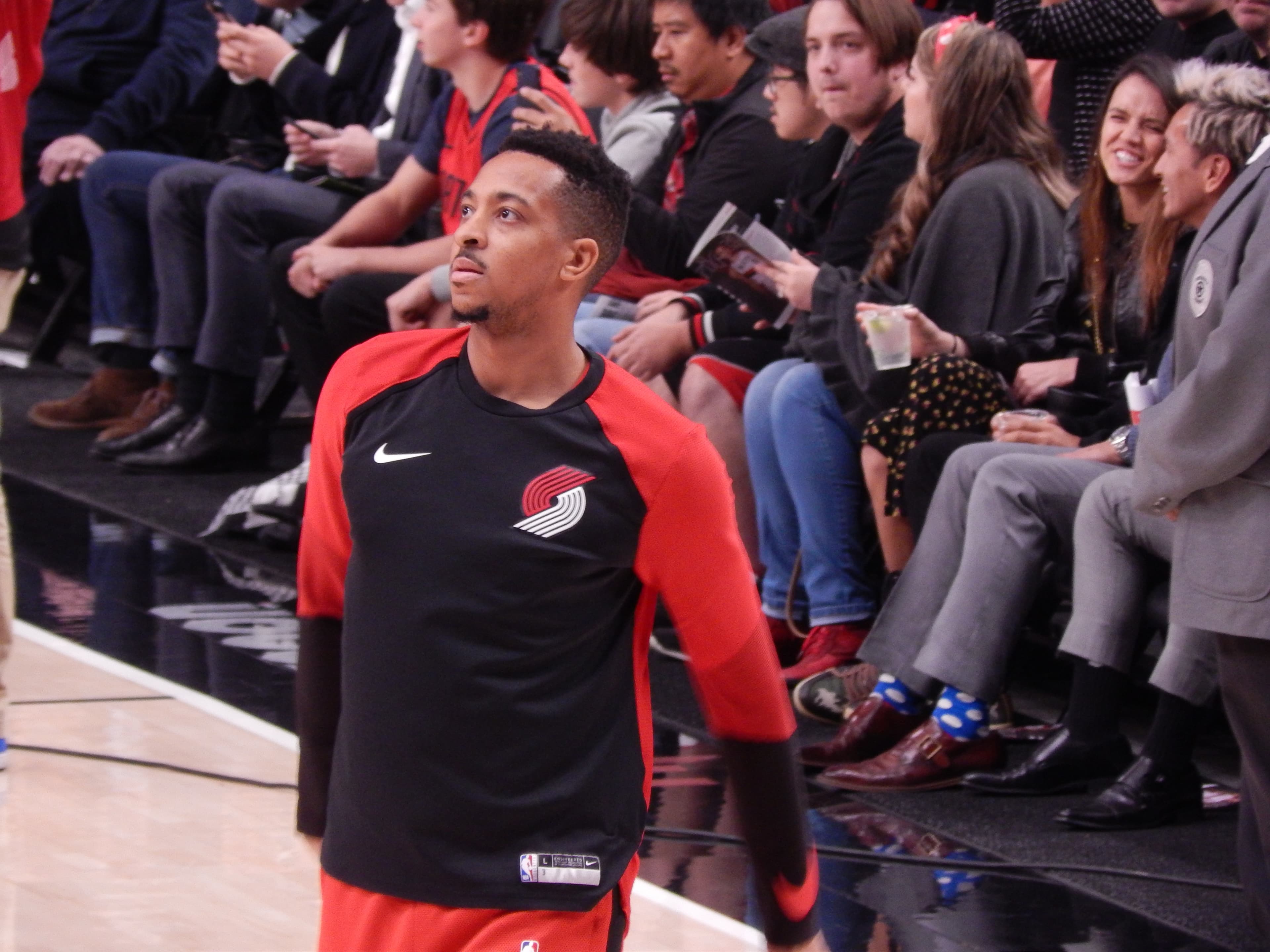
The national previews have landed and Atlanta's sentence for the season is that the Hawks built an anti-Knicks roster. It is meant as a compliment. It is also one more year of being described in relation to somebody else.