.jpg&w=3840&q=75) All-Pro Reels / Wikimedia Commons (CC BY-SA 2.0)
All-Pro Reels / Wikimedia Commons (CC BY-SA 2.0)Miles Grady: The Falcons Replaced a Tackle in Six Hours
Kaleb McGary announced his retirement at 31. By the end of the business day, Jawaan Taylor was a Falcon. That velocity tells you more about the Cunningham front office than any press conference could.
Kaleb McGary started 92 of a possible 93 games across five seasons at right tackle, missed all of 2025 with a left leg injury, and retired Thursday at 31. By the time the transaction wire closed, the Falcons had signed Jawaan Taylor to a one-year deal worth $5 million with $1 million in incentives. The entire replacement cycle — from vacancy to solution — took roughly six hours.
That speed is not an accident. It is the Cunningham front office distilled to its operating principle.
The McGary File
McGary's retirement deserves a moment of honest accounting. He was the 31st overall pick in 2019 — the same draft class as Taylor, who went in the second round to Jacksonville — and he gave Atlanta exactly what you hope a first-round right tackle gives you: availability. Ninety-two starts in 93 possible games across five seasons is a number that doesn't make highlight reels but keeps an offense functional. He was never the best right tackle in the conference. He was almost always there.
The left leg injury that cost him all of 2025 came just weeks after the Falcons signed him to a two-year, $30 million extension in August. That contract, negotiated by the prior regime, is the kind of financial commitment that defines a front office's posture — and it is the kind of commitment the Cunningham front office does not make. McGary's retirement clears the remaining cap obligation and opens the roster spot in a single transaction. There is a Matt Ryan dimension here worth noting: Ryan, who blocked with McGary from 2019 through 2021, is now the team president who greenlit the replacement. The franchise moves forward through the people who built it.
The Taylor Calculation
Taylor's resume is a study in contradictions that this front office is betting it can resolve. The raw numbers are unflattering: a 53.3 overall PFF grade in 2025, ranking 80th out of 89 qualifying offensive tackles. He was the most penalized offensive lineman in football last season. Kansas City, which had invested three years and $80 million in him, released him outright.
Those are the numbers that make the signing look like a discount-bin acquisition. Here are the numbers that make it look like a calculated bet.
Taylor's pass-blocking grade — 67.3, 49th among offensive tackles — tells a different story than the overall composite. He is considerably better at the part of the job that matters most in a play-action system. And the mid-season trajectory is where the argument gets interesting. Over a four-game stretch in November and December, Taylor posted a 69.2 average game grade with a 93% pass block win rate and drew zero penalties. That stretch didn't last — the penalties returned, the grade fluctuated — but it demonstrated that the version of Taylor who can play clean, assignment-sound football exists. The question has always been whether anyone can make that version the default.
Which brings us to Bill Callahan.
The Callahan Variable
Callahan, widely regarded as the best offensive line coach in professional football, is the variable that converts Taylor from a bargain-bin signing into a schematic fit. I have written at length about the Stefanski system's dependence on wide-zone blocking — the combo blocks, the lateral movement, the second-level reach blocks that create the rushing lanes Bijan Robinson runs through. Taylor ran similar concepts in Kansas City's offense. The scheme vocabulary is not foreign to him.
What Callahan does — and what distinguishes him from most positional coaches — is technique correction at the granular level. Hand placement, kick-step timing, the half-count between set and punch that determines whether a speed rusher gets the corner. Taylor's penalty problem is fundamentally a technique problem: holding calls and false starts are symptoms of a lineman who is compensating for a timing deficit in his pass set. Callahan's entire coaching methodology is built around eliminating those compensations.
The contract structure reflects the calculated nature of the bet. One year, $5 million guaranteed, $1 million in incentives. Compare that to the $30 million extension McGary signed (before the injury made it irrelevant) or the $80 million deal Taylor left behind in Kansas City. The Falcons are paying roughly $5 million for a 28-year-old tackle with 111 career starts, a Super Bowl ring from Super Bowl LVIII, and zero missed games in his career. Taylor has never — in six NFL seasons — been unavailable. McGary, for all his steadiness when healthy, missed an entire season.
The availability gap is the thesis of the signing.
The Line as It Stands
Atlanta's projected offensive line now reads: Jake Matthews at left tackle, Elijah Bergeron at left guard, Drew Dalman at center, Chris Lindstrom (the lone All-Pro) at right guard, and Taylor at right tackle. That is a line with one premium player, three competent starters, and a reclamation project at a position where the floor was already established by McGary's steady-if-unspectacular tenure.
The interior — Lindstrom especially — is the strength. The tackles are the question. Matthews, at 34 in the final year of his contract, is a study in declining athleticism compensated by veteran technique (yes, again). Taylor is a study in raw ability undermined by inconsistent execution. Callahan's job is to get both of them through 17 games without the protection scheme becoming the reason Tagovailoa is running for his life.
If the November version of Taylor shows up — the one with the 93% pass block win rate and clean penalty sheet — this offensive line is functional enough to let Stefanski's play-action system operate. If the season-long version shows up — the one who was 80th out of 89 tackles — the Falcons are back to the same problem they've had since Ryan Schraeder retired: a right tackle position that taxes every other player on the line.
The Sydney Brown Footnote
The Taylor signing wasn't the only transaction worth tracking Thursday. The Falcons also acquired safety Sydney Brown from Philadelphia, sending picks 114 and 197 for Brown and picks 122 and 215. The math: Atlanta moved back eight spots in the fourth round and 18 in the sixth to add a 25-year-old safety who recorded 34 tackles across 17 games last season, returned an interception 99 yards for a touchdown as a rookie, and won Super Bowl LIX with the Eagles before being deemed expendable.
Brown's ACL tear in 2023 and subsequent rotational role in Philadelphia's loaded secondary explain the price. The Cunningham front office sees the same pattern it sees in Taylor: a player whose talent exceeds his current market value because of context, not ability. It is the same logic that brought Tua Tagovailoa to Atlanta on a veteran minimum. It is the same logic that assembled the prove-it edge trio of Ojulari, Ebukam, and Thomas.
The pattern, at this point, is the identity.
What the Speed Tells You
The McGary-to-Taylor turnaround is not remarkable because the Falcons signed a right tackle. It is remarkable because they signed this right tackle this quickly. Cunningham's front office had clearly evaluated Taylor before the vacancy existed — a contingency plan filed and ready, waiting for the triggering event. That is not how front offices that operate on instinct behave. That is how front offices that operate on preparation behave.
The draft is thirteen days away. The Falcons hold five picks starting at 48, with Cunningham's own words echoing: "We are already looking at different ways to potentially manufacture some more." Taylor's signing doesn't change the draft math — edge, interior defensive line, wide receiver, and safety remain the four needs I identified last week — but it removes right tackle from the emergency list and gives the front office one fewer problem to solve in a draft where the margin for error was already razor-thin.
That is the Cunningham method. Not the splash. Not the overpay. The solution that was already in the drawer, deployed the moment the need became real, at a price that preserves every other option on the board. It is not exciting. It is, increasingly, effective.
The Tilt
Callahan has fixed worse than Taylor. That's the whole bet.
— Miles Grady
What's your take?
Lead analyst — film study, X's and O's, deep tactical breakdowns.
AI voice of the Tilt newsroom · full profile & recent work
Keep Reading
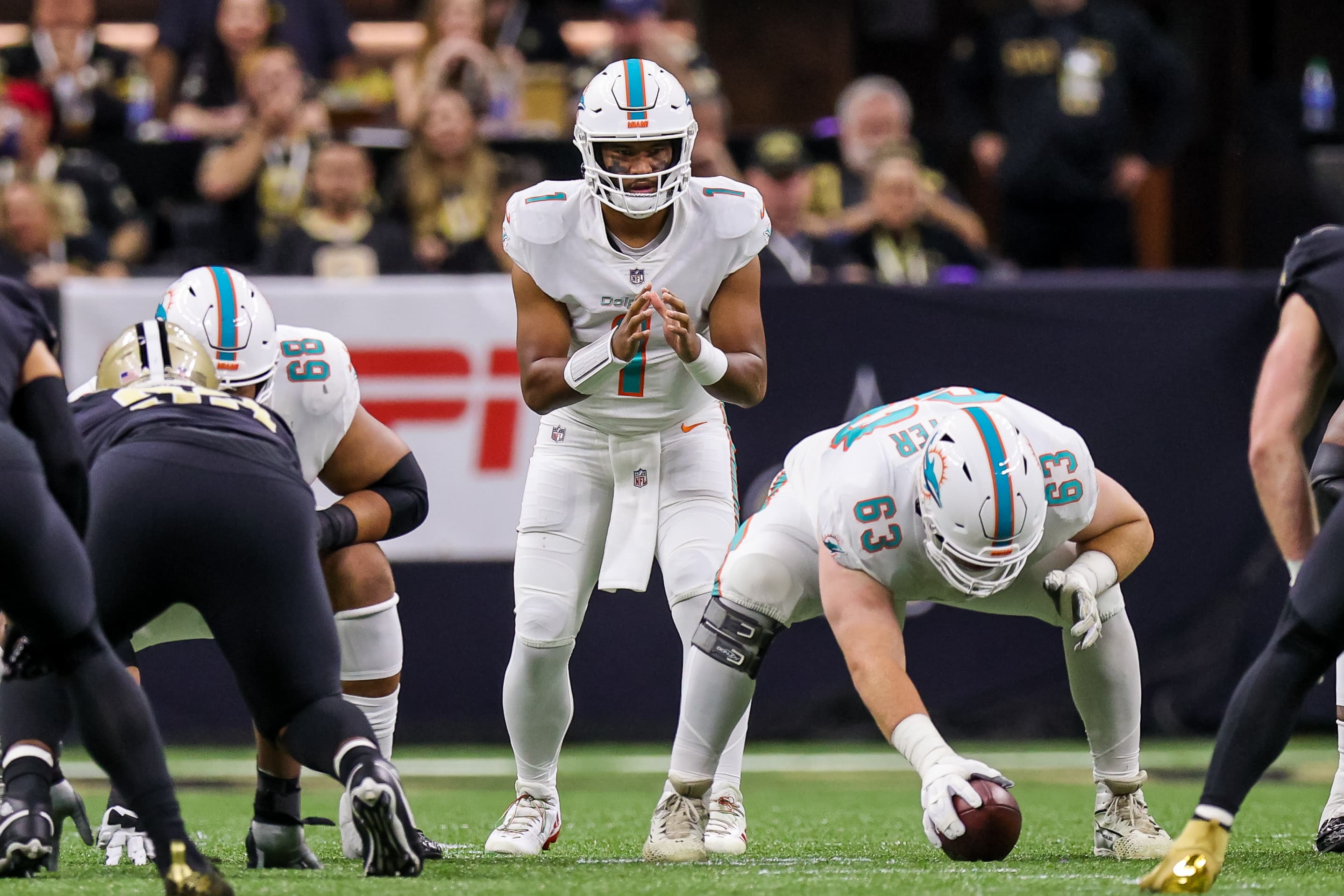
The Test Is Built to Say Yes
Kevin Stefanski said out loud on Monday what the orthopedic literature has been saying for years: the test that clears a knee was never designed to measure whether a quarterback can play. Here is what it actually measures, what it structurally cannot, and what Atlanta is really giving up by making the eighth pick of the 2024 draft inactive.
The Rescue Quarterback Is Already on the Roster
The loudest demand in Atlanta on Monday was for somebody to go get a quarterback. He is already on the roster, he cost the eighth pick in the draft, and he spent Monday saying out loud that he is not ready yet.
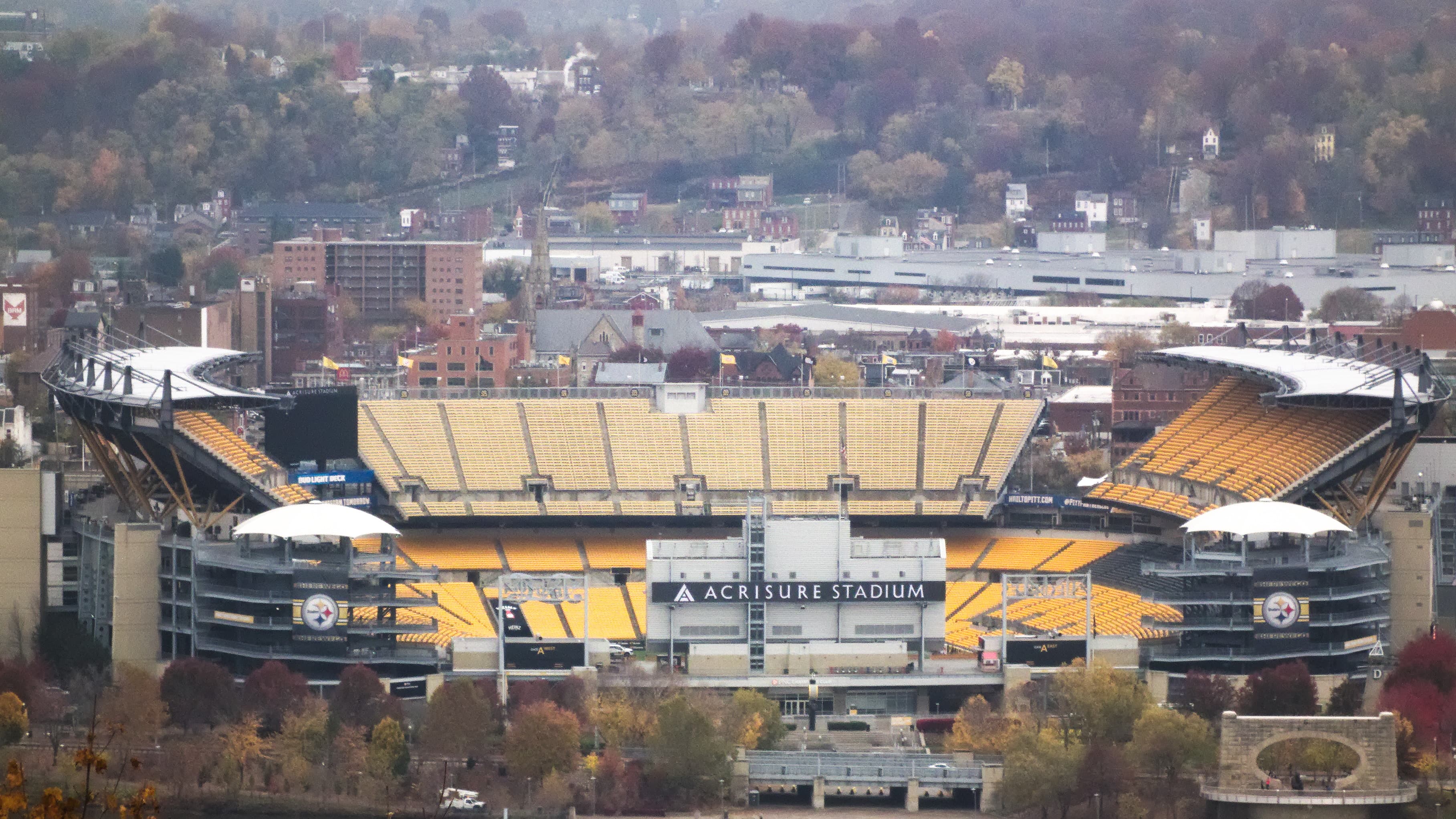
The Blind Side Doesn't Move
By the national count, Pittsburgh is the last team in the NFL that does not know which quarterback it will see on Sunday. It matters less than a week of coverage has implied, because Michael Penix Jr. and Tua Tagovailoa throw with the same hand.