 Photo by JC Gellidon on Unsplash
There's a tradition in Atlanta's music scene that doesn't get talked about much outside the city. When a project doesn't land — when the album underperforms, when the tour gets canceled — the artist doesn't hold a press conference. They go back to the lab. A different one, usually. Somewhere quieter, with fewer people in the room. The work that comes out of those sessions tends to be the most honest thing they've ever made.
The Hawks are in the lab right now. And the question isn't what they're making. It's who they're making it for.
Two weeks have passed since the Knicks sent this team home with the worst playoff loss in franchise history since 1956. The specifics have been documented — I wrote the obituary, and I don't need to write it again. What matters now is the silence that followed. Not the postgame pressers, not the exit interviews. The silence after that. The part where the front office closes the door and decides what they actually believe.
Here's what I know they believe: Jalen Johnson is the center of this. Twenty-two and a half points, ten boards, nearly eight assists a night. First All-Star selection. Thirteen triple-doubles — a franchise single-season record. Numbers that belong in the same sentence as Bob Pettit, and if you think that comparison is premature, it's the only one that captures what he did from January to April.
But the playoffs asked a different question, and JJ didn't have the answer yet. Not couldn't — didn't. He's twenty-three. SI used the word "nervous." I'd use the word "new." The isolation numbers were ugly — 0.73 points per possession, a problem Snyder's system masked in the regular season and the Knicks exposed the moment they decided JJ was the man they'd let beat them. He couldn't.
That's not a verdict. That's a data point. But it's the data point every other decision this summer orbits around.
Start with Austin Reaves, because that's where the noise is loudest. The Athletic's Sam Amick reported the Hawks have "some interest" — and I want to be careful with those words, because "some interest" in NBA front-office language can mean anything from "we're making a call" to "we read the same Twitter thread you did."
But the pursuit itself is telling. Chasing Reaves would mean declining Kuminga's option, letting McCollum walk or slashing his deal, and clearing enough space for a contract starting around forty million a year — all for a player most reporting says is staying with the Lakers. The Hawks reaching for Reaves would be a declaration that the playoff wound demands an accelerated response. That 46 wins and a first-round exit isn't the beginning of something — it's evidence that the something isn't enough.
Except GM Onsi Saleh has been saying the opposite all spring. "We're not a single player away from being what we want to be," he told reporters. That's sustainability language. That's patience. And patience is a hard sell to a city still processing the worst playoff loss in seventy years.
The Kuminga decision is where patience gets tested. His option is worth $24.3 million for one year. The expected move is to decline it and negotiate a longer extension at a lower number — he's twenty-three, plus-15.5 per 100 possessions in the regular season, flashes of the championship pedigree the Warriors invested in. He also noticeably dropped off in the final three games of the series. Twenty-four million is a lot of money to bet on becoming.
If they decline without extending him first, he hits unrestricted free agency. If they pick it up, the Reaves math becomes impossible. The two decisions are linked — the front office has to declare a direction before the summer even gets moving. Patient build or big-game hunting. You can't do both.
Then there's the draft. Pick eight — courtesy of the Pelicans, the kind of asset management that doesn't make SportsCenter but builds franchises — and pick twenty-three. Two first-rounders for a team that won forty-six games. That almost never happens.
Kingston Flemings out of Houston fits the need most directly: a guard who can create his own shot, get downhill, generate for others. The thing that disappeared when the Knicks neutralized McCollum — halfcourt creation under duress — is the thing Flemings does. Yaxel Lendeborg from Michigan is the steadier bet, a twenty-four-year-old rookie whose defensive anticipation and passing would slot into Snyder's system immediately. Mikel Brown Jr. from Louisville has the highest upside outside the top four, but twenty-one games played due to a back injury makes him the kind of gamble you take when you can afford to lose.
The Hawks can afford to lose. That's what forty-six wins and a core under twenty-five buys you.
Snyder's contract complicates everything. One year left. Koonin says the right things — "a very, very long time" — but one year is one year, and every roster decision this summer carries the weight of a coach who might not be here to see it through. The system he built was real. The Hawks went 28-19 after the Trae trade, closed the year 19-5. That's coaching.
But Games 4 through 6 exposed the brittleness: when the opponent solves the system, there's no Plan B. The Knicks adjusted. The Hawks didn't. A system that hums in February and shatters in April needs better players or a deeper playbook. Probably both.
I wrote in March that the identity was real and the personnel wasn't there yet. The playoffs confirmed both halves of that sentence in the most painful way possible. The collective joy, the ball movement, the defense-first mentality — all of it worked until it met a team with more talent, more size, and a coaching staff that made adjustments the Hawks couldn't match.
So here's where the franchise stands. JJ is the foundation, and he's not finished being built. Daniels is the heartbeat — his refusal to fold, even when the series was lost, is the kind of stubbornness that either becomes the spine of a championship team or the frustration of one that never gets past the second round. Okongwu is the quiet architecture. Alexander-Walker is the breakout nobody predicted. The draft picks are the raw material.
What's missing is the thing you can't draft or sign: the belief that it's going to work. Not optimism — Atlanta has plenty of that, always has, right up until the moment it doesn't. I mean institutional conviction. The kind that says this core, this system, this direction is worth protecting even when the city is screaming for a shortcut.
Pettit left. Dominique was traded. Mutombo, Horford, Millsap — all gone before the story was finished. Trae was traded nine months ago. The pattern is older than most of the players on this roster. Breaking it requires a front office that means it when they say "sustainable" and a franchise player who wants to be here when the seats fill back up.
The lab is quiet right now. The summer will tell us what comes out of it.
Soundtrack: "Studio" by ScHoolboy Q
Keep Reading
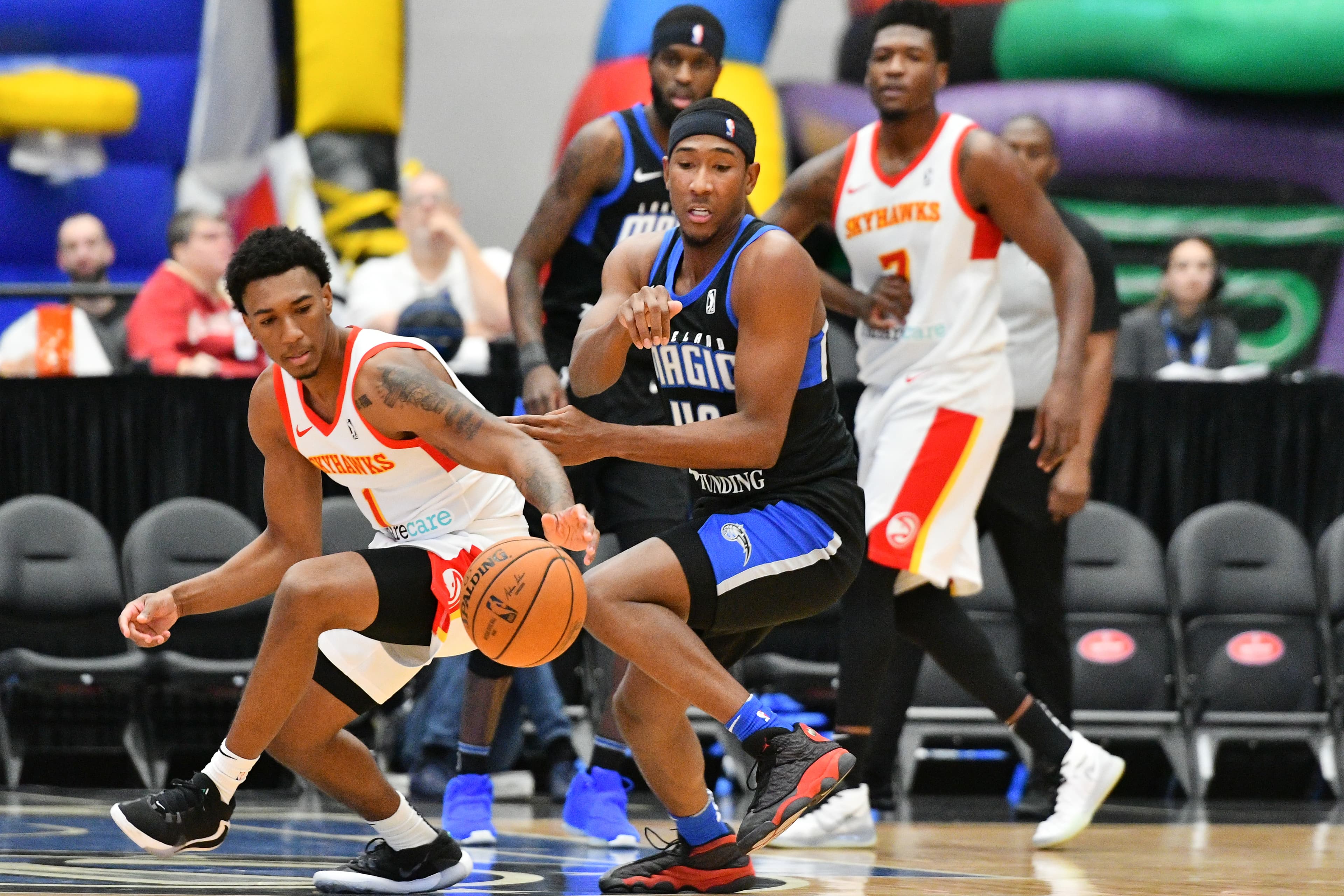
Everybody Kept Their Old Job
The Hawks handed the College Park Skyhawks a new general manager, a new head coach and a first-ever associate head coach on Wednesday, and none of the three gave up the job they already had in Atlanta. Two of them used to play there.
Nobody Else in the Sentence
Yesterday I asked whether anyone would ever describe this Hawks team without naming another franchise to finish the sentence. It took one night, and the answer came from a player who has not practiced here yet, in a gym in Quebec City, in nouns nobody writing previews has access to.
Built Against Somebody
The national previews have landed and Atlanta's sentence for the season is that the Hawks built an anti-Knicks roster. It is meant as a compliment. It is also one more year of being described in relation to somebody else.