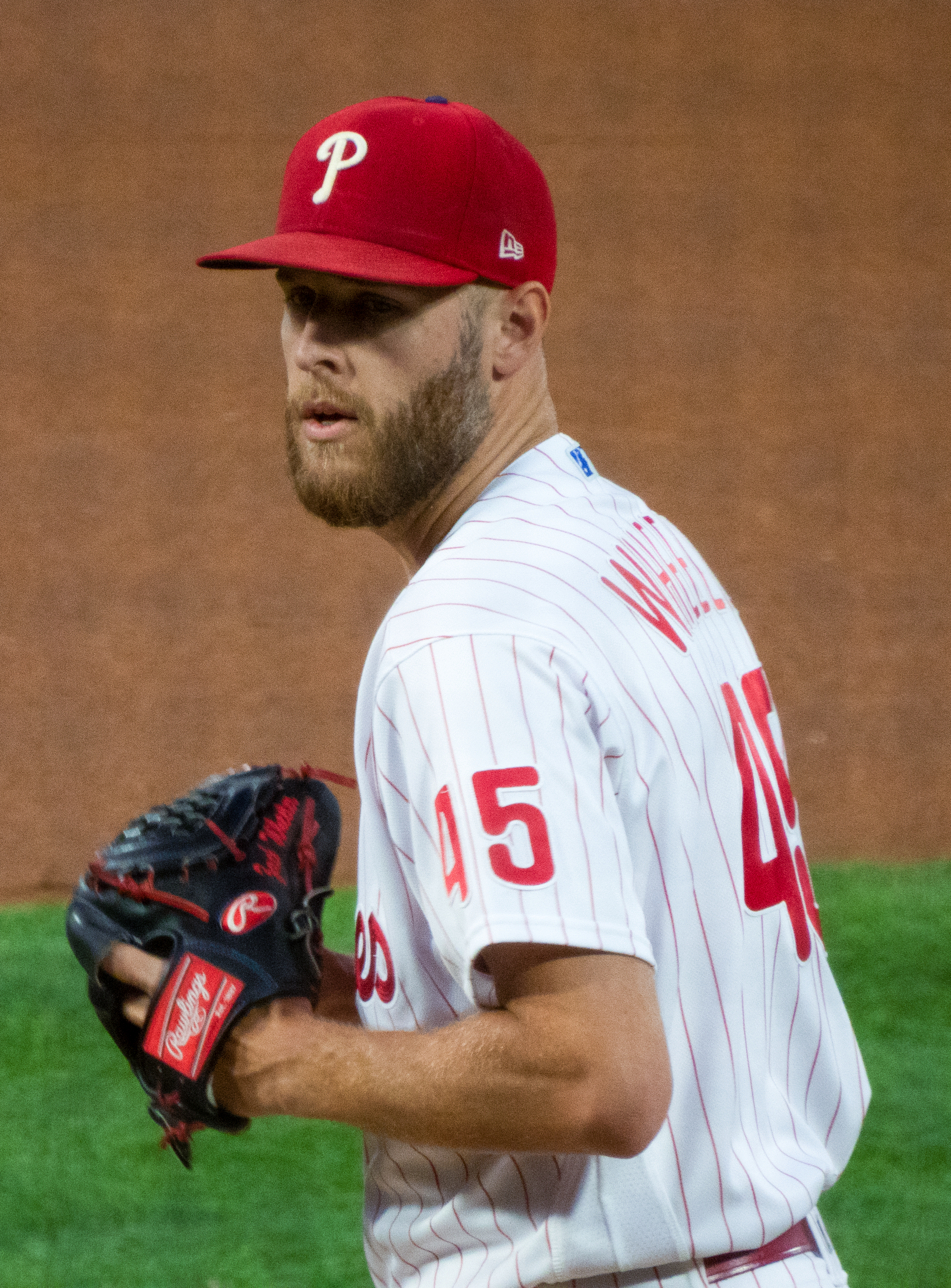
 Photo by Zach McHoul, CC BY-SA 4.0, via Wikimedia Commons
The Runs That Needed Nobody
Atlanta loaded the bases in the first inning with nobody out and did not score. It scored twice the rest of the night, and both times the runner and the run were the same man.
Drake Baldwin singled to center to open the game. Ronald Acuña Jr. singled to left behind him. Matt Olson walked. Bases loaded, nobody out, and Atlanta had already built the best half inning it would see all night.
It scored nothing. Michael Harris II fouled out to third, Mauricio Dubón struck out, Ozzie Albies flied out. Philadelphia scored twice in the bottom half. Final: Phillies 4, Braves 2, at Citizens Bank Park, Atlanta the road team in game two of four.
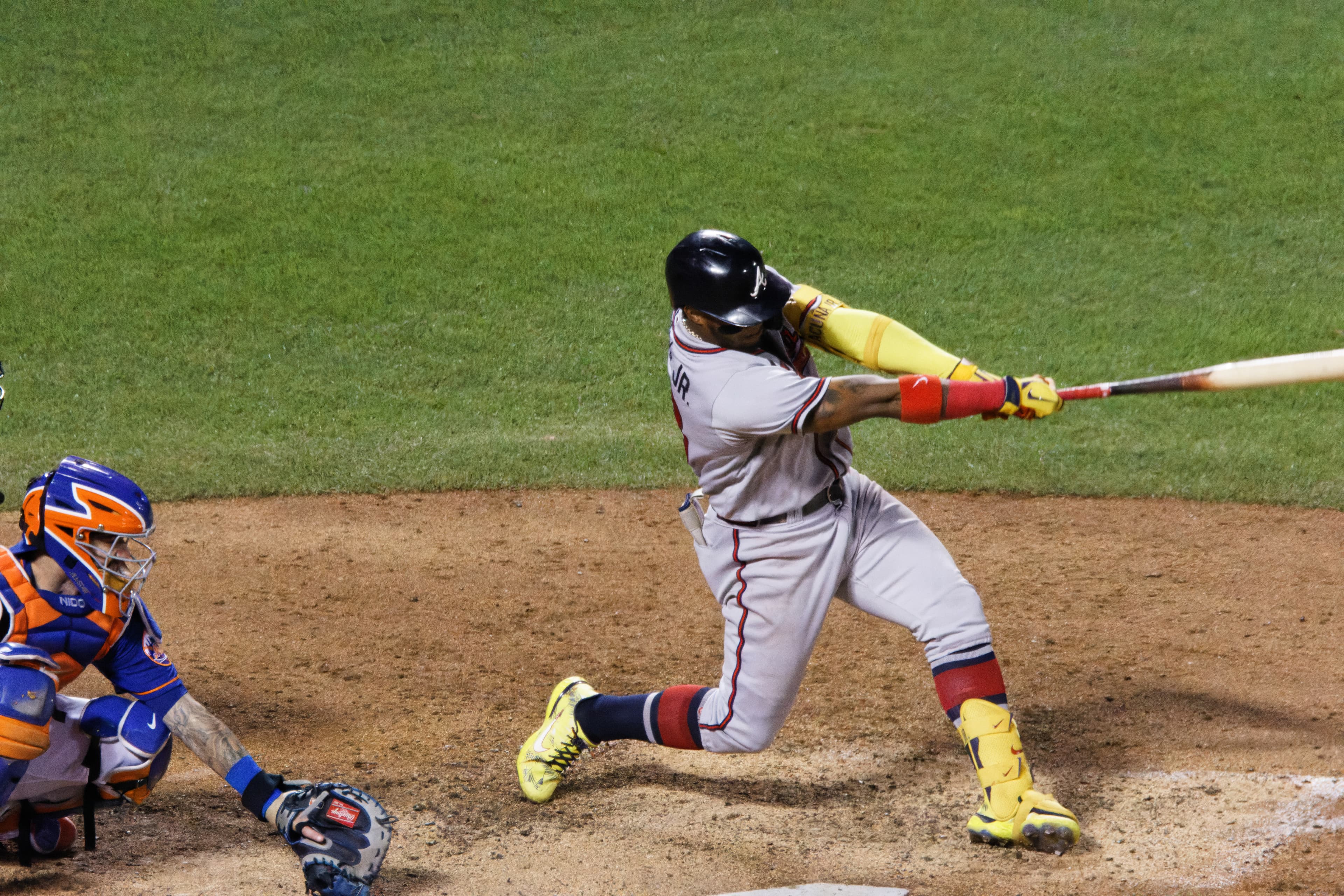
Atlanta scored twice the rest of the night, both on solo home runs. Acuña in the third, 450 feet to left center. Austin Riley in the seventh, 428 feet to left center off Jonathan Bowlan. Not one Atlanta baserunner crossed the plate.
Seven Braves reached base: five hits and two walks. Two scored, both on their own swing. The other five stood where they stopped.
This was not a failure to hit the ball hard. Two swings traveled a combined 878 feet. It was a failure to do anything that required a second event. Atlanta's five hits were three singles and two home runs. No doubles. No triples.
The five hits belong to three players: Baldwin 2-for-4, Acuña 2-for-4, Riley 1-for-3. The other six went 0-for-20 and took eight of Atlanta's 12 strikeouts. Olson was 0-for-3 with two of them, and he has 37 home runs, tied for fourth in baseball. The power in this lineup is not the problem. The connective tissue is.
Then the cruel column. Martín Pérez needed 84 pitches to record 11 outs: three and two thirds innings, seven hits, four runs, four walks. Kyle Schwarber and Bryce Harper, who made eight outs on fifty pitches on Friday, went a combined 4-for-7 with two walks.
Pérez is owed his context: six August starts, six earned runs, 30 and two thirds innings, a 1.76 ERA. A pitcher in the best form of his season had one bad night, which is a different sentence than his line invites.
Ray Kerr then threw 3.1 scoreless innings on one hit and Brent Suter a scoreless eighth: 4.1 innings, two hits, no runs, a live game handed back. Atlanta trailed by three when Kerr came in and by two when it ended: one run, in four and a third innings of a game that was there to be taken.
This is not only tonight. Since the All-Star break, across 20 road games, Atlanta has scored 62 runs, and 28 of them, 45.2%, scored on home runs. In four of those 20 games the figure was 100%, and tonight was the fourth. I have no league baseline to set beside it, so I will not call it abnormal. On the road, this lineup's runs arrive in the one form that requires nothing after the swing.
Now the part I would rather not write. This morning I argued that the schedule did not explain Atlanta's road scoring, and the sentence I hung it on: "Atlanta's worst road scoring of the second half did not come against the best pitching in the sport. It came against the middle of it."
Tonight was not the middle of it. Zack Wheeler went six innings, three hits, one run, two walks, nine strikeouts. He also carried a 6.26 ERA through six August starts, and Atlanta scored one run off him anyway. Of those 20 road games, this is the one where the excuse I rejected this morning has its best case. Leaving it out would be cheating.
I also wrote this morning that the reporting "forecasts nothing about 6:05 tonight." It did not. One night is not evidence for an argument built on 19 games, and I am not taking a lap on an evening the Braves lost.
Road game 20 came in at two runs, and 3.16 runs per road game since the break became 3.10. Atlanta is still 30th of 30, and the gap back to 29th widened from 0.24 to 0.36. The Yankees held 29th this morning; they scored five on the road tonight and climbed past Pittsburgh, at 3.46. That is the whole update.
Atlanta is 84-58, first in the National League East, four games ahead of Philadelphia at 80-62, with 20 to play for each. The magic number is 17. It was 17 twenty-four hours ago. The Braves did not win and the Phillies did not lose, the one combination that leaves the clinch arithmetic where it found it.
So it is not a collapse. Atlanta has won nine of its last 12, and Philadelphia is 16-4 in its last 20, which is the honest reason a five-game lead is a four-game lead. The Braves spent a Saturday in September and bought nothing with it. The arithmetic is unbothered. The offense is the part I would still like an answer about, and there are 20 games to give me one.
The Tilt
Atlanta's road problem is not power but everything that has to happen after the swing.
— Ellis Magnolia
What's your take?
Ellis Magnolia
Numbers & narrative — statistical depth worn lightly, literary pacing.
Keep Reading
_dugout.jpg&w=3840&q=75)
Philadelphia Need All Six
Philadelphia have exactly one mechanism left for catching Atlanta, and it is six baseball games, the last of them on September 13. After that the two clubs finish the season unable to touch each other.
The Schedule Was Not the Problem
Since the All-Star break Atlanta has scored 3.16 runs a road game, which is last in baseball, and the best available excuse is that the schedule did it. I went and checked the schedule.
Fifty Pitches to Nothing
Kyle Schwarber and Bryce Harper batted eight times at Citizens Bank Park tonight, made eight outs, and needed fifty pitches to do it. Atlanta won 5-2 in the least interesting way available, which is exactly why it counts for something.