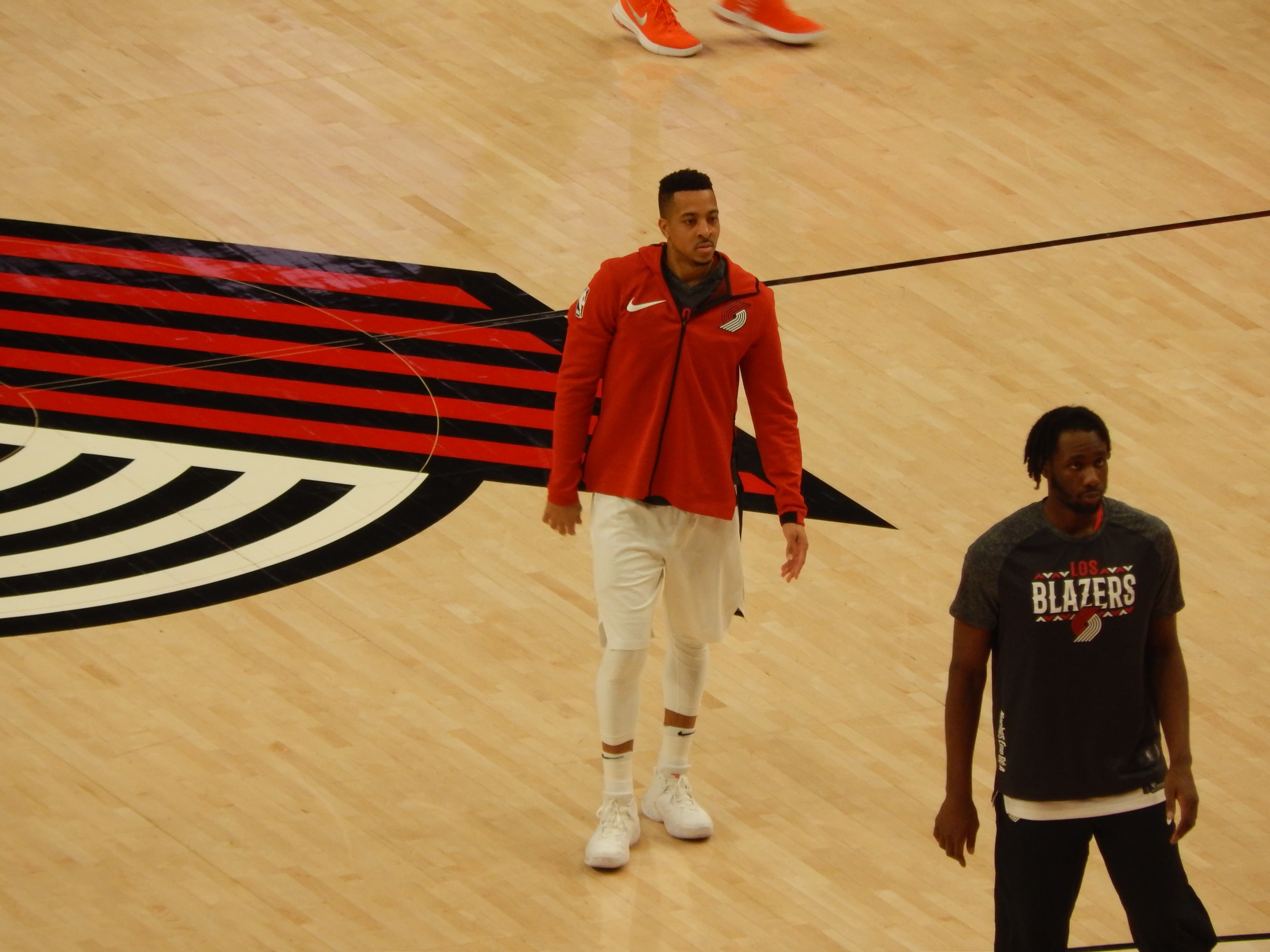
 Photo via Wikimedia Commons, CC BY-SA 4.0
There's a phrase that comes up in conversations about young teams in the playoffs, usually from retired players on studio shows, usually delivered with the kind of knowing condescension that makes you want to throw something at the television: they'll learn from this.
As if learning is passive. As if the lesson arrives like a package on the doorstep and all you have to do is bring it inside. As if Saturday's 16-point humiliation at State Farm Arena — Knicks fans audibly owning the room by the second quarter, zero fast break points for a team that lives on pace, CJ McCollum going 0-for-4 from three — will automatically metabolize into something useful by Tuesday night.
Learning isn't what happens to you. Learning is what you decide to do with the information. And right now, the Hawks are carrying more information than they've ever held at once.
Two Games, Two Buildings, Two Truths
Twelve days ago, at Madison Square Garden, the Hawks did something only one other team in the shot clock era had done: came back from 12 down after three quarters to steal a road playoff game. McCollum hit a fadeaway with 33 seconds left. The final score was 107-106. He posted "See you in the A" afterward, and the entire city exhaled.
That was April 20. Game 2. The Hawks went home carrying something precious — proof that the Garden, for all its mythology, was not a fortress they couldn't breach.
Then came Game 3 at State Farm. McCollum hit another go-ahead shot with 12.5 seconds left. Hawks won 109-108. The system was humming, the crowd was locked in, and for 48 beautiful hours, the narrative was "can anyone stop the Hawks?" National media picked it up. The AJC ran a piece titled "Hawks are done being pushed around." The city, in that way cities do when the trajectory seems clear, started looking ahead.
Saturday answered. The Knicks came into State Farm with what Josh Hart called "a sense of urgency" and played like a team that understood the alternative was going home. Karl-Anthony Towns recorded the fourth playoff triple-double in Knicks history. OG Anunoby grabbed 10 rebounds and said afterward, simply: "We were physical from the start." The Hawks trailed 68-44 at halftime and never mounted anything resembling a response.
Here is what a 2-2 series feels like from the inside: you are both the team that stole a game at the Garden and the team that lost its own building. Both are equally true. Neither cancels the other. And Game 5 — Tuesday night, 8 PM, TNT, back at Madison Square Garden — is the moment that determines which truth gets to define you.
The McCollum Problem
I don't mean McCollum is the problem. I mean McCollum is the problem — the one this series keeps posing and the Hawks keep answering differently each night.
Games 2 and 3: McCollum scored 32 and hit two game-winners. He was the steadiest man in the building, the 13-year veteran with 67 playoff games whose body language never broke, whose crossover still creates just enough space against defenders ten years younger. The Hawks didn't win those games because of their system. They won them because McCollum went places the system can't reach — the contested midrange with three seconds on the shot clock, the wrong-foot fadeaway that requires a decade of muscle memory.
Game 4: McCollum scored 17 on 6-for-18. He went 0-for-4 from three. Mike Brown's defensive adjustments — switching, trapping, forcing him left — took away the rhythm that had carried the prior two games. His own postgame: "Knicks played better than us. They played harder."
Then the sentence that sat with me: "If you'd told us before the series started we'd be 2-2 going back to the Garden... life's not so bad."
Life's not so bad. That's veteran equilibrium. That's a man who has been in enough of these to know that a bad game is a bad game, not a death sentence. The question is whether the rest of the roster — the players for whom this is the first real adversity of their professional lives — can access that same calm without having earned it through repetition.
What Youth Looks Like Under Pressure
Jalen Johnson is averaging 22.5 points, 10.3 rebounds, and 7.9 assists in this series. Those are franchise-player numbers. They are also numbers that mask the inconsistency underneath: 24-10-8 in Game 3, then 14 points on 33 percent shooting in Game 4, with three rebounds in a game where the Knicks punished every missed box-out.
Nickeil Alexander-Walker won Most Improved Player this season. He averaged 20.8 points per game during the regular season, up from a career high of 12.8. The MIP award is supposed to certify that the improvement is real — permanent, structural, load-bearing. The playoffs are where that certification gets tested against opponents who have three days between games to study your tendencies and a coaching staff whose entire job is to take away what you do best.
Dyson Daniels leads the league in steals. His defensive intensity is the system's engine. But he's shooting 20 percent from three in this series, and at some point the Knicks will start leaving him open on purpose, daring him to beat them from distance, collapsing on Johnson and McCollum with the extra body. The structural vulnerability that existed all regular season doesn't disappear in April. It concentrates.
These are not character flaws. They are the natural consequences of being young, being talented, and being asked to do something you've never done before while 19,000 people at Madison Square Garden are actively trying to make you forget who you are.
The Garden Remembers Both Versions
MSG has seen both Hawks teams already. Game 1: tight, tentative, outworked on the glass — a 6-seed making its first road playoff appearance. Game 2: free, fearless, shooting 72 percent in the fourth quarter to come back from 12 down and make the Knicks 40-2 in a stat they'd been 40-1 in since 1954.
The difference between those two performances wasn't tactical. Snyder didn't draw up a magical new play between games. The difference was posture. The Hawks in Game 1 played like visitors. The Hawks in Game 2 played like they had decided they were allowed to be there.
That's the decision that faces them Tuesday. Not a schematic one — though adjustments to how they defend Towns in the post and funnel Brunson off the pick-and-roll will matter. The decision is simpler and harder: do they walk into the building believing they belong, even after Saturday said otherwise?
Saturday's information was loud. It said: you are not yet who you think you are. Your identity is not yet load-bearing under maximum stress. But Game 2 said something equally loud: you can win in the hardest building in basketball when no one expects you to.
The Night That Decides
Jalen Brunson has been the most consistent player in this series — somewhere around 26 points and 8 assists per game, shooting 46 percent, never rattled regardless of venue. He is the kind of star who imposes his will through repetition, possession by possession, until you realize you've been losing by a thousand cuts. The Hawks don't have a Brunson. They have McCollum, who is brilliant but streaky. They have Johnson, who is ascending but unproven in this exact moment. They have a system that, when everyone is connected, can neutralize any individual star — but a system is only as strong as the weakest point of belief in it.
Tuesday night will not be quiet. Madison Square Garden in a 2-2 playoff series is the loudest, most hostile version of itself. The Hawks will feel the floor vibrate during introductions. They will hear "defense" chants so loud they have to communicate with hand signals. McCollum piped this sound through practice speakers three weeks ago. The simulation is over. This is the room.
And somewhere in the first four minutes — before the game settles into its rhythm, before Snyder's adjustments can take hold, before the stats and the shot charts and the analysts have anything to work with — you will know. You will see it in Johnson's shoulders. In whether Daniels contests the first loose ball like it belongs to him. In McCollum's first pull-up three — does it come with confidence, or does he hesitate a beat too long?
This team has been asking itself a question all season. Through the post-trade surge, the 19-5 run, the home streak, the clinch, the first-round draw. The question keeps getting harder and the stakes keep rising, but it's always been the same question: who are we when it gets difficult?
Saturday said: we don't know yet.
Tuesday is the night they find out.
Soundtrack: "Doo Wop (That Thing)" by Lauryn Hill — because the truth you need to hear almost never arrives gently.
The Tilt
The Hawks' Game 5 isn't about basketball strategy or matchup adjustments — it's about whether a young team can hold two contradictory truths at once: that they belong here, and that belonging doesn't protect you from disappearing.
— Simone Edgewood
What's your take?
Keep Reading
Everybody Kept Their Old Job
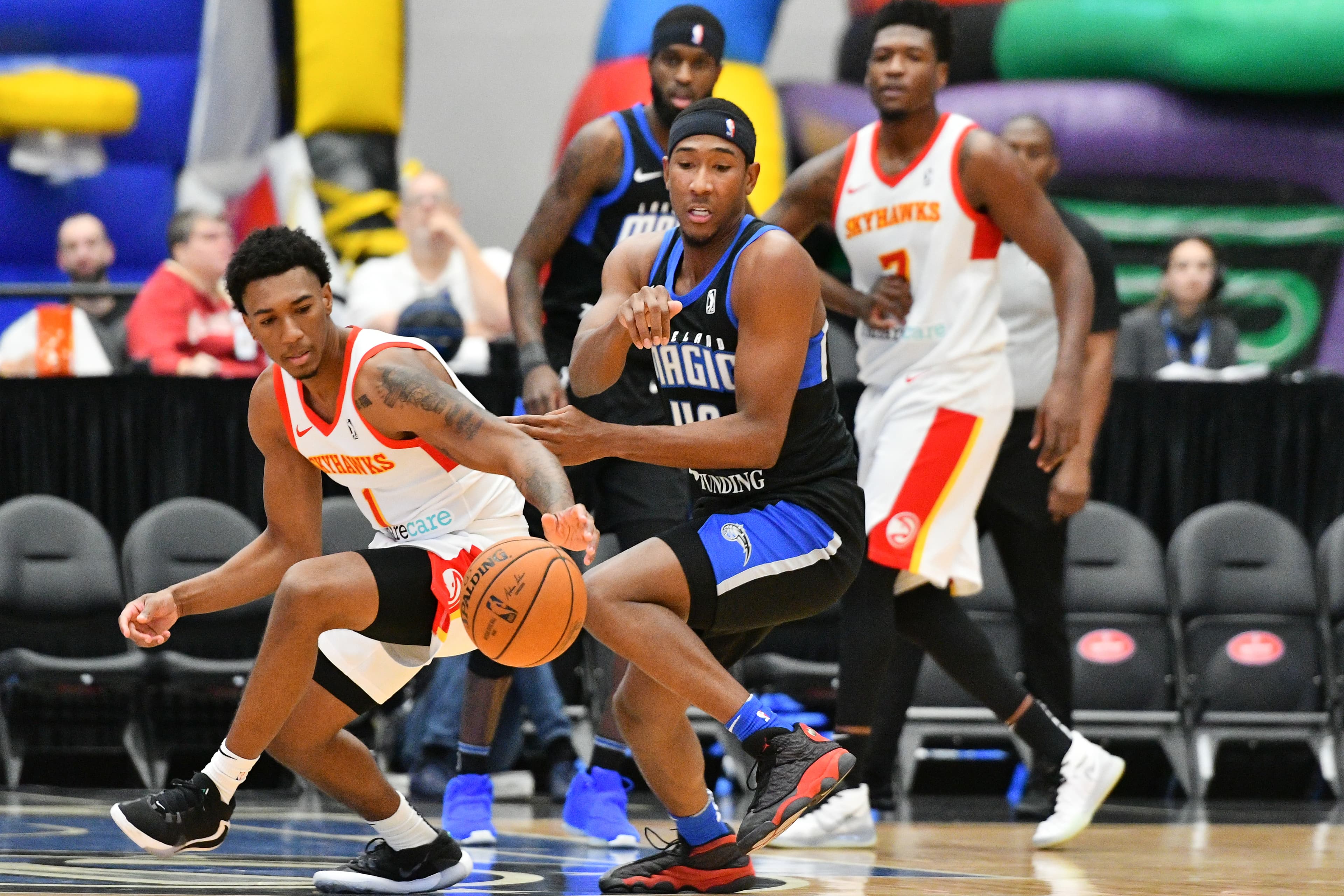
The Hawks handed the College Park Skyhawks a new general manager, a new head coach and a first-ever associate head coach on Wednesday, and none of the three gave up the job they already had in Atlanta. Two of them used to play there.
Nobody Else in the Sentence
Yesterday I asked whether anyone would ever describe this Hawks team without naming another franchise to finish the sentence. It took one night, and the answer came from a player who has not practiced here yet, in a gym in Quebec City, in nouns nobody writing previews has access to.
Built Against Somebody
The national previews have landed and Atlanta's sentence for the season is that the Hawks built an anti-Knicks roster. It is meant as a compliment. It is also one more year of being described in relation to somebody else.