.jpg&w=3840&q=75) Photo by Erik Drost, CC BY 2.0, via Wikimedia Commons
Photo by Erik Drost, CC BY 2.0, via Wikimedia CommonsThere's a stretch on Memorial Drive, right where it bends past Oakland Cemetery and the old Grant Park neighborhoods start filling in, where three different buildings are under renovation at the same time. One's becoming a restaurant. One's becoming condos. The third one has a sign that just says COMING SOON with no other information. Every few weeks someone on the neighborhood group chat asks if anyone knows what's going in there. Nobody does. But people keep watching.
That third building is the Atlanta Hawks right now.
Two and a half weeks since Game 6. Since 140-89, the worst playoff loss since 1956. Since Dyson Daniels got ejected and Jalen Johnson sat on the bench watching the Knicks pull their starters before the fourth quarter started. Two and a half weeks since the season ended not with a fight but with a demolition.
And the strangest thing about Atlanta in the aftermath is how quiet the anger has been.
I expected fury. Atlanta sports runs hot and then runs cold, and the distance between devotion and disinterest is usually about one bad weekend. But the conversations I'm hearing — at the West End barber on Ralph David Abernathy, at the coffee spot on Wylie Street, in the group chats that never really stop — aren't angry. They're confused. Not confused about basketball. Confused about what to feel.
Because this team did something that makes the disappointment harder to process: it made people care first.
Forty-six wins. Best record since 2015-16. First outright playoff berth since 2020-21. A 27-15 surge after trading Trae, a defense that climbed to eighth in the league, a post-All-Star run of 20-6. Twenty-five different starting lineups and a net rating that trailed only Oklahoma City. Those numbers aren't a fluke. They're an identity.
But the series told a different story. By Game 6, the Knicks weren't competing against the Hawks so much as demonstrating what happens when a talented system meets a more talented roster with a coaching staff that adjusts faster. The building went numb. The season ended not with a question mark but with a period.
What the city is sitting with now isn't whether the season was a success. It was. The question is what you do with a season that proved something real and then ended in a way that made you wonder if the proof matters.
Onsi Saleh said two things at his presser that keep circling back. First: "We are not one player away." That's patience language. Don't expect us to solve this with a name. Second: "We got to nail the draft." Not we got to make a trade. Not we got to sign a star. The draft. The long play.
The infrastructure for a significant summer exists — picks eight and twenty-three, $36 million below the luxury tax, the mid-level exception, Jonathan Kuminga's $24.3 million option deadline on June 29, CJ McCollum's free agency. But clarity about what kind of summer it's going to be does not.
That ambiguity is the thing the city is living inside. Not the anger of a collapse. Not the excitement of an arrival. The in-between.
Quin Snyder called the post-trade chemistry "a rare thing," and he's right. You don't manufacture what happened in that locker room after January. Five players averaging between fourteen and twenty-three points. The league's leading steals player in Daniels. A pace that pushed opponents into mistakes before they realized the game had started.
But rare things can also be fragile things. The system that averaged thirty assists per game in the regular season cratered against the Knicks' adjustments. The closer problem — nobody on this roster can reliably create a bucket in isolation against a set defense — followed the Hawks from February into April and announced itself as the defining limitation.
De'Andre Hunter said it after Game 6. Two words: "Sick to our stomach." That's not a guy who checked out. That's a guy who tasted something and lost it. There's a difference between a team that falls short because it never believed and a team that falls short because it did.
So who are the Hawks now?
A twenty-three-year-old franchise player who put up nearly twenty-three, ten, and eight but still couldn't solve an isolation problem that will define his ceiling until he does. A twenty-two-year-old defensive engine whose three-point shot is a structural vulnerability. A breakout scorer in Nickeil Alexander-Walker who went from 12.8 points per game to over twenty — and nobody outside Atlanta noticed. A Kuminga option that might get exercised and might not. A McCollum return that might happen and might not. Draft picks at eight and twenty-three that might reshape the geometry or might just add depth.
Every decision loops back to the same question: do you trust what you saw from January through April, or do you trust what you saw in late April more?
The thing about Atlanta — the thing that makes covering this city different — is that the relationship between fans and teams has never been simple. This isn't Boston, where loyalty is inherited. This isn't New York, where the teams are the weather and you just deal with it. Atlanta chooses its teams the way it chooses its restaurants: with enthusiasm that has to be earned and can be withdrawn.
The Hawks earned something this year. The post-trade run, the home energy, the way the team played for each other instead of around one player. State Farm during that thirteen-game home winning streak was one of the best rooms in basketball. Not because of volume. Because of attention. People watching plays develop. Recognizing rotations. Reacting to a pass before the shot went in. That's not casual fandom. That's investment.
The risk is that the city pulls back. Not out of anger but out of self-preservation. Atlanta has been here before — with the sixty-win Hawks who got swept by LeBron, with the Hawks who shushed MSG and then lost to Milwaukee, with a Falcons franchise that has taught this city exactly what it costs to believe. The scar tissue is thick. A 51-point playoff loss lands directly on it.
But I don't think this team gets forgotten the way those did. The 2015 Hawks were a system without a face. The 2021 Hawks were a face without a system. This version has both — Johnson's emerging stardom, Daniels's ferocity, Alexander-Walker's quiet excellence, Snyder's architecture — and the emotional register is different. People aren't just watching the Hawks. They're curious about them. Curiosity is a harder thing to build than a roster.
Can Atlanta commit to a team that's still becoming? Not a championship contender, not a lottery team, but something in the gap — talented enough to hurt you, young enough to surprise you, honest enough to admit what it doesn't know yet.
The building on Memorial Drive still doesn't have a sign. But the lights have been on late.
Soundtrack: "Pink + White" by Frank Ocean
The Tilt
The Hawks don't need a player — they need a city willing to believe again.
— Simone Edgewood
What's your take?
Keep Reading
Everybody Kept Their Old Job
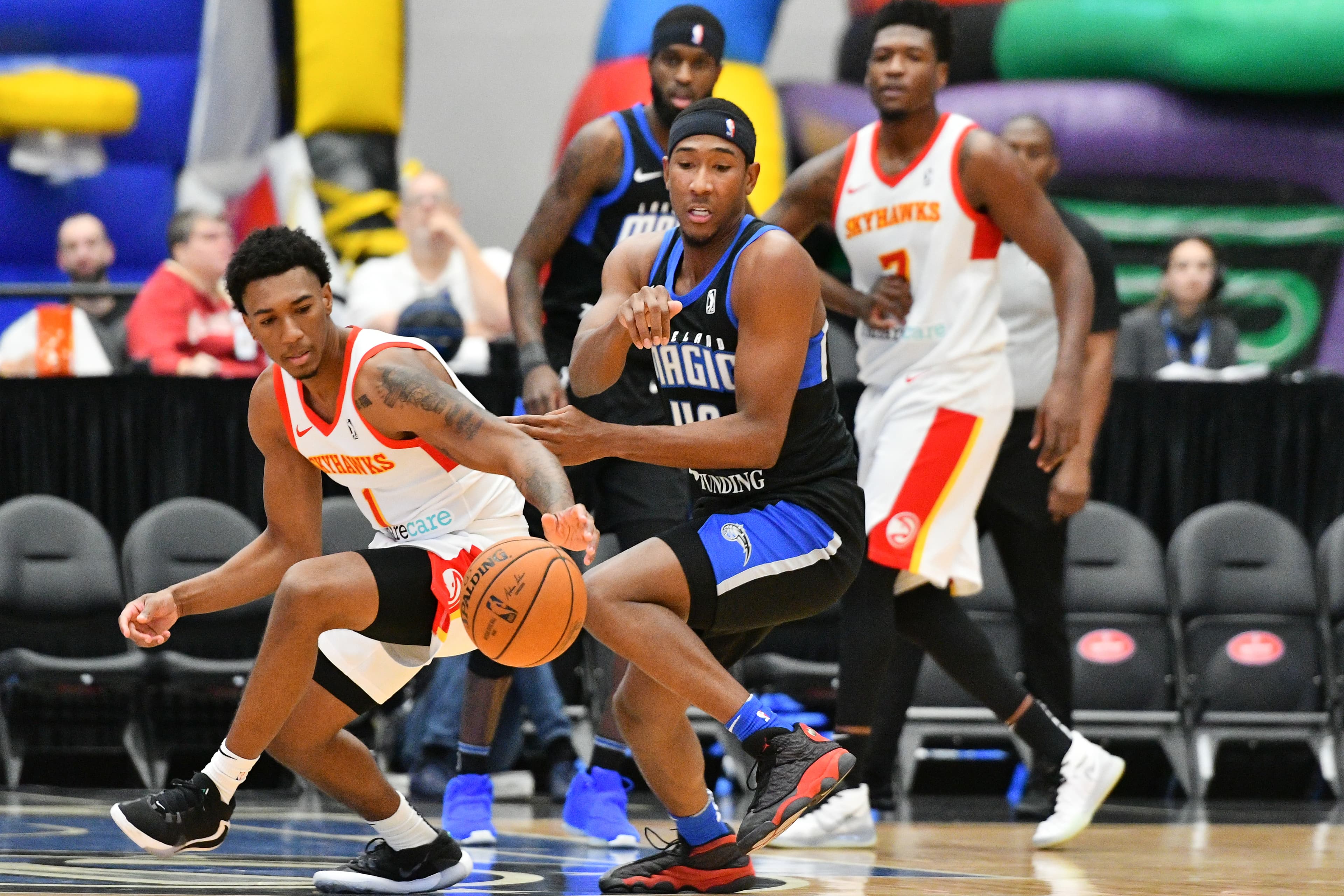
The Hawks handed the College Park Skyhawks a new general manager, a new head coach and a first-ever associate head coach on Wednesday, and none of the three gave up the job they already had in Atlanta. Two of them used to play there.
Nobody Else in the Sentence
Yesterday I asked whether anyone would ever describe this Hawks team without naming another franchise to finish the sentence. It took one night, and the answer came from a player who has not practiced here yet, in a gym in Quebec City, in nouns nobody writing previews has access to.
Built Against Somebody
The national previews have landed and Atlanta's sentence for the season is that the Hawks built an anti-Knicks roster. It is meant as a compliment. It is also one more year of being described in relation to somebody else.