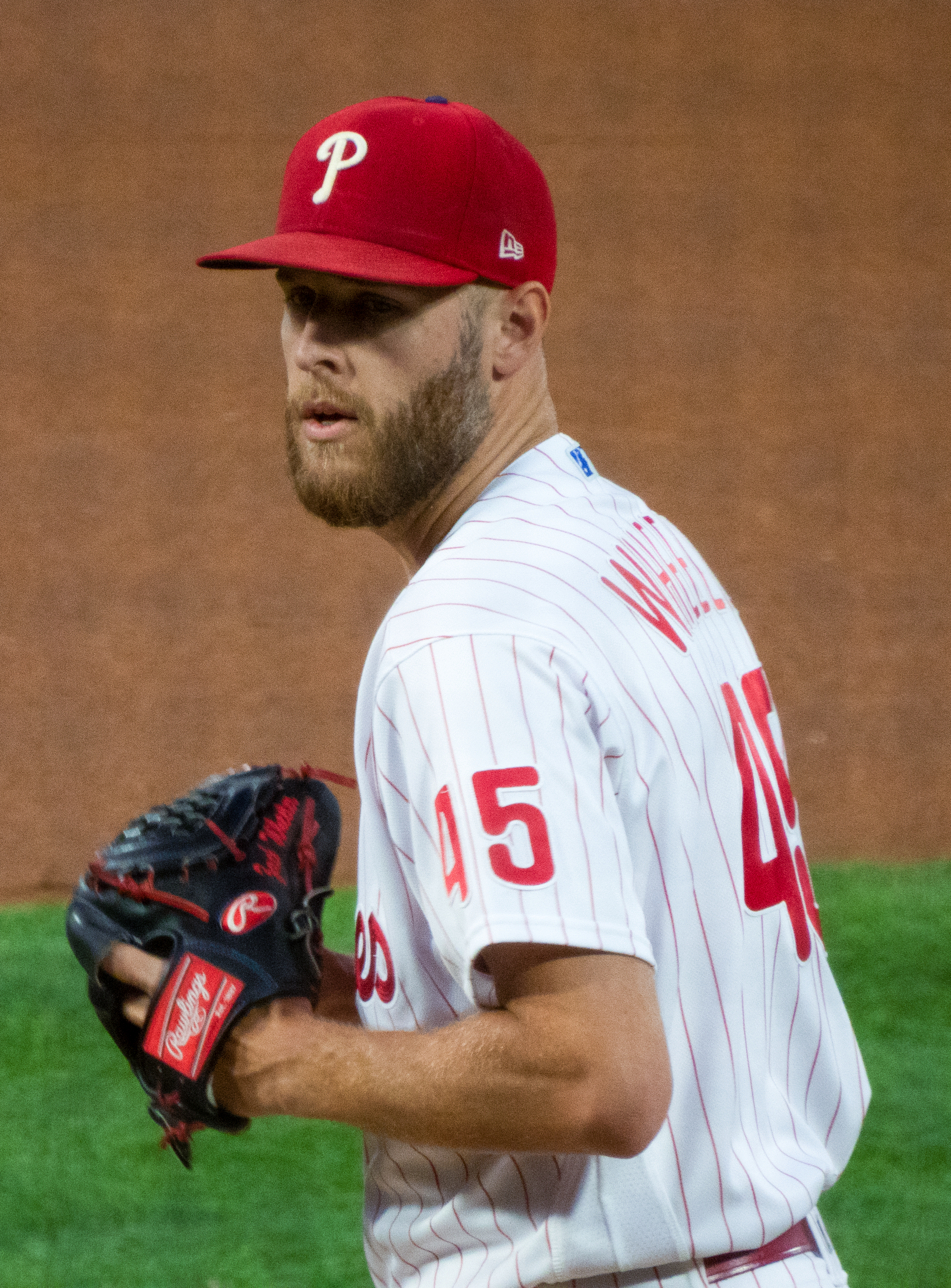
.jpg&w=3840&q=75) Photo by David from Washington, DC, CC BY 2.0, via Wikimedia Commons
Photo by David from Washington, DC, CC BY 2.0, via Wikimedia CommonsThe Other Four Needed Somebody
Yesterday I wrote that Atlanta's road runs were arriving as solo home runs, the runner and the run the same man. Tonight Atlanta scored five in Philadelphia and exactly one of them worked that way.
Five runs. Four of them needed a man already standing somewhere.
Yesterday, after Atlanta scored twice in this ballpark and both runs arrived on solo home runs, I wrote that the runner and the run were the same man. The thesis underneath it was that Atlanta's road problem was never power. Power travels. What had stopped travelling was everything that has to happen after the swing -- the runner who is already on second when the double lands, the out that trades a bat for ninety feet, the two or three men a run actually costs.
Tonight the sequence came back for one evening, and it is worth walking through it in order, because the order is the argument.
Sixth inning, Atlanta down 2-0. Mike Yastrzemski on base. Ronald Acuña Jr. lifts a sacrifice fly to center and Yastrzemski scores. Two men, one run, and one of them made an out to do it.
Eighth inning, Atlanta down 4-1, Aaron Nola having just finished seven innings of one-run baseball and handed the game to somebody else. Yastrzemski singles to center. Baldwin doubles to center and Yastrzemski takes third. Then Acuña, on the seventh pitch of the at-bat after fouling off four, hits a 100.5 mph fastball 414 feet to left center. Three runs. Two of them belonged to the men who were standing there when he swung.
Ninth inning, tied, Philadelphia's closer on the mound. Ozzie Albies doubles to right. Sean Murphy grounds out to shortstop and Albies moves to third -- an out, and the most useful thing anybody did all night. Austin Riley triples to deep center. One run, three men, and not one of them could have been removed from the sequence.
Only Acuña, circling on his own swing, needed nobody.
That is a genuinely different night from the one I described yesterday, and I would rather say so than pretend I never wrote it down. The question is what it is worth, and the answer is less than it felt like from the eighth inning onward.
Here is the number I printed on Friday and am not taking back: since the All-Star break, Atlanta have scored 3.16 runs per road game, last in baseball. I recounted it against the schedule feed tonight and came out a shade under my own figure -- twenty road games and sixty-two runs going into this evening, which is 3.10. Same finding, slightly worse coat.
Now add tonight. Twenty-one road games, sixty-seven runs, 3.19.
That is what a very good night is worth against a sample that size. Nine hundredths of a run. What tonight offers is not a correction to the number. It is a demonstration that the machinery still exists -- that this lineup remembers how to spend three plate appearances on one run when the alternative is losing.
The rest of the evening has the shape of an accident, and mostly was one. Tyler Mahle gave six innings and allowed two runs, neither of them earned. Dylan Dodd gave up two solo home runs in the seventh, to Derek Hill and Kyle Schwarber, and both of those were the kind of run I spent yesterday describing, the man who needed nobody. Philadelphia were glad to take them. Dylan Lee struck out Bryce Harper to open the eighth. Raisel Iglesias worked the ninth for his thirty-first save.
And Riley, who is hitting .224 with a .662 OPS across 141 games and has been the least productive regular in this lineup for most of the summer, hit the ball that won it off a reliever carrying a 1.72 ERA. I am not going to build a redemption story on one triple. But there is a small fact sitting underneath it that I did not expect when I looked it up: Riley and Acuña have the same number of home runs this season. Sixteen each. Riley has played 141 games to get there. Acuña has played 90.
Walt Weiss, afterward: "To have a good year, you've got to be able to look back and have a handful of games or so that you say, 'How did we win that one?'"
He is describing a collection, not a trend, and that is the correct unit. Atlanta are 85-58 and lead by five with nineteen to play. Nothing about tonight changes what the lead is made of or when it was banked. What it changes is smaller and harder to put on a scoreboard: for one inning in a park where they have not been able to string anything together, Atlanta needed three men to score one run, and had them.
Nineteen games left to find out whether that was a memory or a habit.
The Tilt
Atlanta's road offense is not fixed, and one good ninth inning is not the night to say otherwise.
— Ellis Magnolia
What's your take?
Ellis Magnolia
Numbers & narrative — statistical depth worn lightly, literary pacing.
Keep Reading

The Six Ran Out
Atlanta clinched the season series against Philadelphia tonight, 7-2, with four games still to play. The tiebreaker is decided, and I am one loss away from being wrong about everything else.
_(cropped).jpg&w=3840&q=75)
The Lead Has a Date on It
Atlanta led this division by ten and a half games the morning Philadelphia fired their manager. Philadelphia have taken six and a half of them back, and the four that are left are the remainder.
The Runs That Needed Nobody
Atlanta loaded the bases in the first inning with nobody out and did not score. It scored twice the rest of the night, and both times the runner and the run were the same man.