_(cropped).jpg&w=3840&q=75) Photo by D. Benjamin Miller, CC0, via Wikimedia Commons
Photo by D. Benjamin Miller, CC0, via Wikimedia CommonsThirteen of Fifteen, and the Pitcher Who Took a Decade to Get Here
The Braves have lost one series all season. Grant Holmes spent ten years in the minors waiting for a rotation like this one.
Thirteen of fifteen. That is the Braves’ series win total through 47 games: thirteen wins, one split, one loss. Only the Mariners have taken a series from them, back on May 6 in Seattle. The 2026 Braves don’t just beat teams. They beat them over three games, consistently, with different heroes each time.
Sunday’s 8-1 rout of the Red Sox clinched the latest one, and the box score was emphatic enough — Austin Riley’s 431-foot three-run homer in the first inning, five runs through two frames against Brayan Bello, a game that was over before most of Truist Park had found their seats. But the series told a more interesting story across all three games. Friday: Mike Yastrzemski walked it off in the tenth. Saturday: the Braves’ offense managed two runs against an excellent performance from Tolle and lost when Willson Contreras deposited a two-run homer in the eighth. Sunday: the correction.
Different heroes, same result. That is not luck. That is roster depth functioning as an identity.
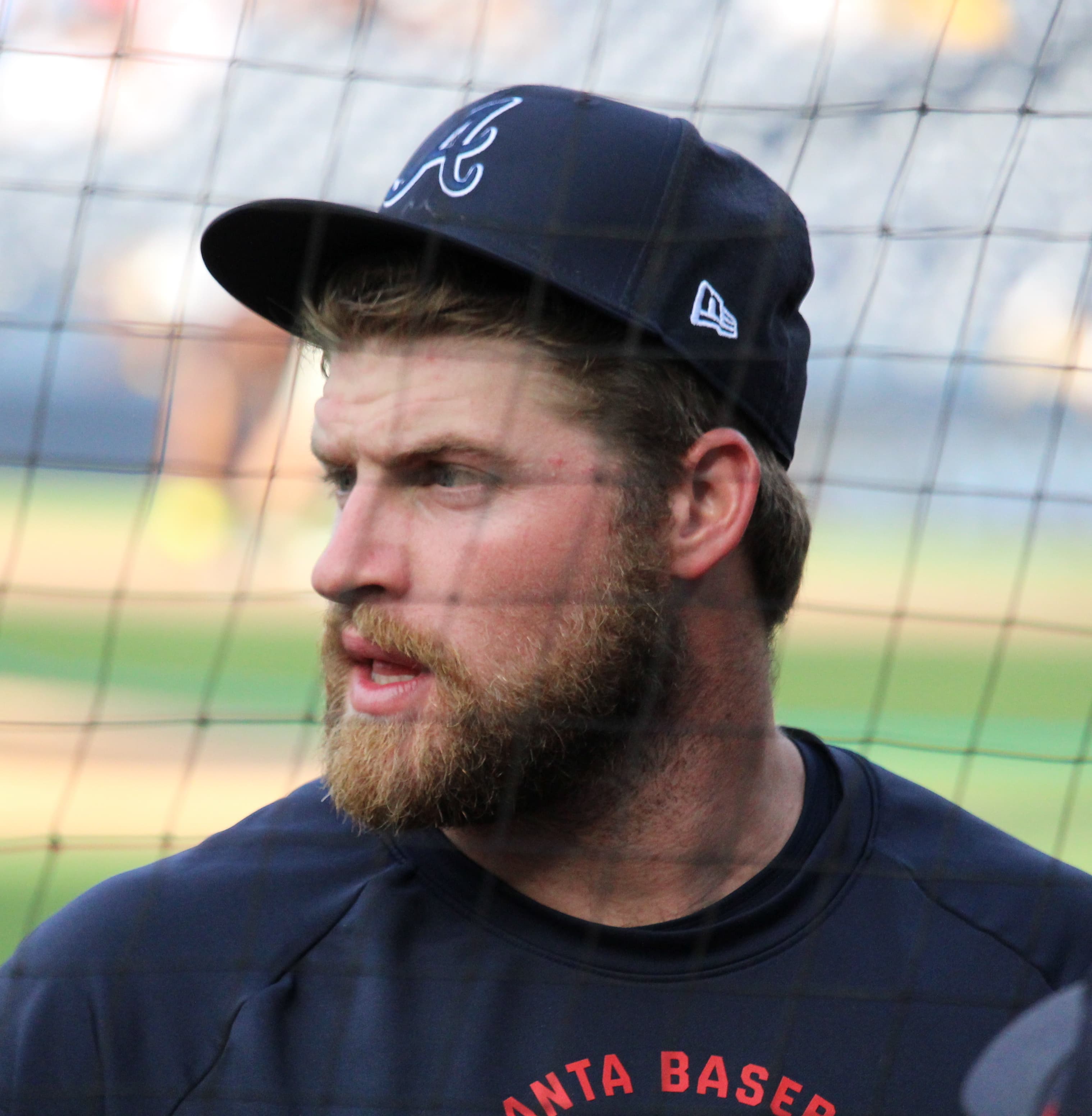
The most interesting performer Sunday was not Riley, though we will get to him. It was Grant Holmes, who threw six scoreless innings on 87 pitches — five hits, one walk, nothing resembling danger.
Holmes was drafted 22nd overall by the Los Angeles Dodgers in 2014, the same year as Kyle Schwarber, Michael Conforto, and Alex Jackson. All three of those players reached the majors within four years. Holmes did not reach the majors for a decade. He pitched in three organizations across a dozen minor league stops. He dealt with a partially torn UCL in mid-2025 and avoided surgery through rest and rehabilitation. He made his MLB debut on June 16, 2024, at 28 years old — three scoreless innings against the Rays in a game no one remembers.
Now he is 30, pitching in the rotation for the best team in baseball, and his line through nine starts reads like a back-end starter you’d sign a two-year extension for: 3.80 ERA, 1.27 WHIP, a 38-to-22 strikeout-to-walk ratio across 47.1 innings. He does not throw hard. He does not generate viral strikeout clips. He pitches six innings, limits damage, and hands the ball to a bullpen that finishes the job.
The Braves do not need Holmes to be an ace. They need him to be reliable, and reliable is exactly what a decade in the minors teaches you. There is no panic in his delivery. There is no wasted motion. He has waited too long for this to rush through it.
Now, Riley.
I wrote in April that the ledger had two lines moving in opposite directions — Baldwin ascending, Riley descending. Riley’s early-season line was .205, a number that looked worse beside the context of two consecutive injury-shortened seasons: the 2024 wrist fracture, the 2025 core muscle surgery. His bat speed was measured at 74.8 mph, a full 1.5 mph slower than the second half of 2023. The body was answering, but slowly.
Over his last nine games, Riley has hit .316 with three doubles and eleven RBI. And then Sunday, the 431-foot three-run homer — his longest of the season, his seventh overall, and the kind of swing that makes the franchise’s largest contract look like a reasonable investment again. He doubled in the fifth and scored on a Dominic Smith single. Two hits, four total bases, three RBI, a run scored. That is the Riley the Braves signed.
The bat speed metrics are still lagging. His fast-swing rate has dropped from 60.5% to 48%. The 431-foot homer was not a return to peak form — it was a statement that the current form can still produce violence. For a player whose body has been the story for two years, Sunday’s game was the body finally writing a paragraph worth reading.
The Braves are 32-15. They lead the NL East by eight games. Their run differential of plus-98 is the best in baseball. They rank first in runs per game, first in wRC+, and first in starting rotation ERA. They open a four-game series in Miami tonight.
Thirteen of fifteen series won. A first-round pick who waited ten years to pitch in games that mattered. A franchise cornerstone whose comeback finally has a signature moment. The Braves don’t need every night to be a headline. They need enough of them to win the series. Through 47 games, that math has worked every time.
The Tilt
Holmes's ten-year minor league journey is the most underrated story on the best team in baseball — and Sunday was his best argument yet.
— Ellis Magnolia
What's your take?
Keep Reading
October Has Two Off Days
I wrote yesterday that October asks a club who its best three starters are. The published 2026 calendar says the number is four, and Atlanta are carrying six arms with 17 games left to sort them.
Lopez Is Not Tonight's Problem
Everybody is about to tell you the Braves are gambling on an arm that has not pitched since July. The pitch count says otherwise, and it points at something worse.
_15.jpg&w=3840&q=75)
Somebody Has to Take the Turn
Atlanta went to a six-man rotation to keep five arms fresh for October. On the first night of nine straight games, the sixth man got ten outs, the staff gave up four home runs, and the bullpen covered the rest.