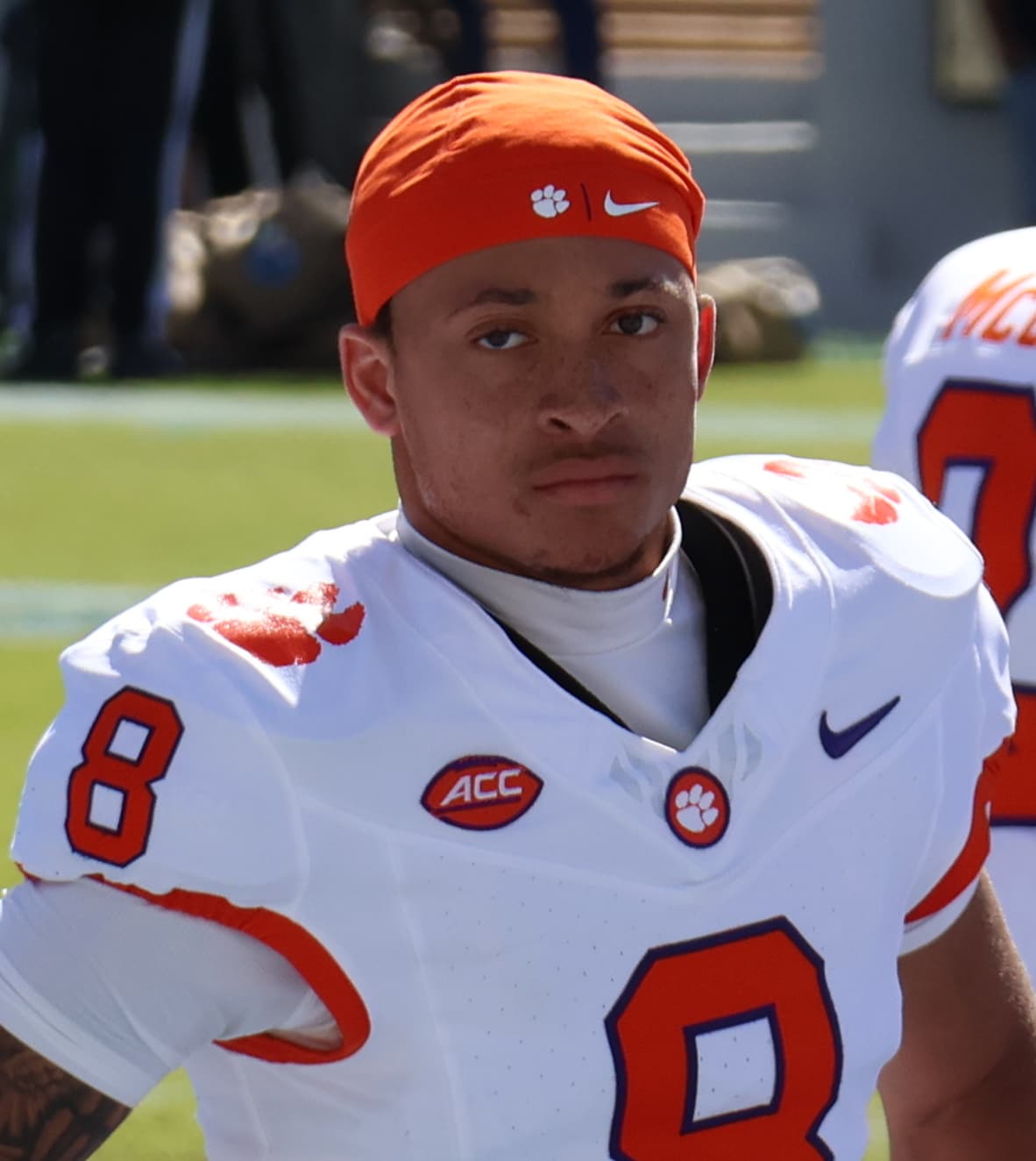
 Photo by Hameltion, CC BY-SA 4.0, via Wikimedia Commons
Two Terrells, One Coverage Shell: The Scheme Case for Atlanta's New Secondary
A.J. Terrell's 2025 PFF coverage grade was 57.3 — the worst of his career and a number that tells you less about the player than it does about the scheme transition he was asked to make alone. He will not be making the next one alone.
A.J. Terrell’s 2025 PFF coverage grade was 57.3 — 78th among 114 qualified cornerbacks, a career worst for a second-team All-Pro earning $20.25 million a year. If you stopped there, you would have a decline narrative. Plenty of national evaluators did. But if you understand what Jeff Ulbrich asked his secondary to do last season, the 57.3 becomes a different kind of data point.
It becomes the cost of a transition that is not finished yet.
The coverage shift
Under Jimmy Lake in 2024, the Falcons played man coverage on 16.4% of snaps — 29th in the NFL. Cover 3 on 46.9%, fifth-most in the league. Zone-heavy, read-and-react. A.J. thrived in it.
Then Ulbrich arrived and ran man at 32.5%, eighth-highest in the NFL. Cover 1 jumped from 11.3% to 28.6%. The corners went from one snap in six in man to one in three. That is not a tweak. That is a fundamental rewiring — different eyes, different feet, different leverage, different recovery angles when the receiver wins.
A.J. spent five seasons training his eyes to read zone. Ulbrich asked him to unlearn half of it at game speed. That his overall grade dropped to 57.7 is less surprising than the fact that he still started 15 games and recorded 12 passes defensed while making the adjustment. He was learning a second language.
This is the context that makes the Avieon selection a scheme story, not just a family story.
What Avieon brings to the coverage structure
Avieon played his college career in Clemson’s man-heavy system. He does not need to learn the language A.J. is still acquiring. He already speaks it.
At 5-11 and 180 pounds with a 4.39-second forty, Avieon has the closing speed to survive in off-man and the competitive fire to play press. His 30 career passes defensed across 39 games tell you he finds the ball. His eight career forced fumbles — a Clemson record for a defensive back, five of them in 2025 alone — tell you what happens when he arrives. His PFF tackling grade of 77.6 last season indicates a corner who does not avoid contact in the run game.
But the scouting report is not clean. His hip transitions are stiff — he turns from his ankles rather than opening and flipping his hips, creating awkward recovery angles on double moves. At 180 pounds, bigger-bodied NFL receivers will win contested catches at the high point. He had zero interceptions in 2025 despite 11 pass breakups, suggesting he gets to the ball but does not finish. Quick releases across his face gave him trouble in soft press at Clemson.
These are real concerns. They are also coaching-correctable concerns, and the Falcons happen to employ a $20.25-million-per-year coach who plays the same position.
The deployment math
The depth chart has A.J. at right cornerback, Mike Hughes at left cornerback, and Billy Bowman Jr. at nickel. Hughes is on the final year of his contract. Bowman is recovering from an Achilles tear suffered near the end of 2025. That leaves a nickel position with no healthy long-term answer and a CB2 spot occupied by a transition piece.
Avieon’s pathway to early snaps runs through both doors. Dabo Swinney said after the pick that Avieon “can play either corner spot” and “the nickel” — backed by his college deployment, where he lined up outside, in the slot, and blitzed from the cornerback alignment. While Bowman rehabs, Avieon fills the nickel. When Bowman returns, Avieon slides outside and competes with Hughes for CB2 — a competition Hughes is likely to lose by midseason.
The long-term projection: A.J. at RCB1, Avieon at LCB1, Bowman at nickel, Jessie Bates III and Xavier Watts at safety. Two press-man corners from the same backyard, a versatile slot defender, two rangy safeties who can play single-high. That is the personnel Ulbrich has been building toward.
The practice-field accelerant
Here is the part of the scheme case that does not show up in any coverage-rate statistic. The fastest way to develop press-man technique is to practice against it every day.
The Terrell brothers grew up competing against each other — same high school, same techniques, same college program at Clemson (though they never overlapped on the roster). Their mother has said they “feed off of each other’s play from a Saturday to Sunday level,” critiquing performances week to week even across the NFL-to-college divide. That feedback loop is about to become a daily occurrence.
A.J. gets a practice partner who has played man-heavy coverage since high school. Avieon gets a partner who has seen every route combination the league throws at corners for six professional seasons. This is not a feel-good cliché. It is a schematic accelerant — the mechanism by which A.J.’s transition to Ulbrich’s system gets compressed from a two-year adjustment to a one-year refinement.
The closest historical comp is Jason and Devin McCourty on the Patriots from 2018 to 2020 — the first twins to play as teammates in a Super Bowl. But Devin had moved to safety by then. The McCourtys played different roles within the same coverage shell. The Terrells are both cornerbacks, both press-man specialists, both lining up on the outside in base defense and surviving on islands in Cover 1. That mirror has no modern parallel.
What this means for Year 2
Ulbrich doubled the man-coverage rate in Year 1 and found what SI described as a “sweet spot” blending man and zone over the final four to five games of 2025. Year 2 is refinement, not installation. The scheme is set. The question was whether the personnel could keep up.
With Avieon, the answer shifts. Two corners who can play isolated man. A nickel in Bowman (when healthy) with slot versatility. A safety duo in Bates and Watts capable of supporting single-high looks. And a blitzing wrinkle — Avieon recorded four career sacks at Clemson from the cornerback alignment, a tool that fits Ulbrich’s multiplicity philosophy.
The 57.3 was not the end of a story. It was the middle of one — the cost of Year 1 in a new system, absorbed by a player who had earned the right to absorb it. A.J. Terrell was learning, and he was learning alone. Now he has a partner who speaks the same language, plays the same position, and has been sharpening against him since they were children in the same backyard in Southwest Atlanta.
The coverage numbers will look different in Year 2. The scheme demands it, and now the personnel match.
The Tilt
Avieon wasn't a family pick. He's the second island corner Ulbrich's scheme demands.
— Miles Grady
What's your take?
Keep Reading
The Test Is Built to Say Yes
Kevin Stefanski said out loud on Monday what the orthopedic literature has been saying for years: the test that clears a knee was never designed to measure whether a quarterback can play. Here is what it actually measures, what it structurally cannot, and what Atlanta is really giving up by making the eighth pick of the 2024 draft inactive.
The Rescue Quarterback Is Already on the Roster
The loudest demand in Atlanta on Monday was for somebody to go get a quarterback. He is already on the roster, he cost the eighth pick in the draft, and he spent Monday saying out loud that he is not ready yet.

The Blind Side Doesn't Move
By the national count, Pittsburgh is the last team in the NFL that does not know which quarterback it will see on Sunday. It matters less than a week of coverage has implied, because Michael Penix Jr. and Tua Tagovailoa throw with the same hand.