.jpg&w=3840&q=75) Photo by Erik Drost, CC BY 2.0, via Wikimedia Commons
Photo by Erik Drost, CC BY 2.0, via Wikimedia CommonsCunningham Wants to Manufacture Picks. The Trade Chart Has a Vote.
Six days before Atlanta's first pick, Ian Cunningham keeps saying he wants to trade back. The trade value chart, the mock-draft board, and a coach who still refuses to name a Penix timeline all suggest something colder — Cunningham is going to have to make the best pick available at 48, because his leverage to do anything else is thinner than the rhetoric.
Stefanski has a sentence he keeps returning to. Asked about Michael Penix Jr.'s knee recovery on Tuesday, the Falcons' head coach described his quarterback, for the third time this offseason, as being "right where he needs to be." Asked about the return timeline in the same session, he said the team was "not so focused on timetables just yet." Two carefully hedged constructions, one after the other, six days before the draft begins in Pittsburgh.
If you're only listening for news, you're missing the architecture. A coach who is comfortable with a quarterback's rehab names a target week. A coach who isn't names nothing. Stefanski is naming nothing.
That matters, because the language from the top of the building is the clearest outside signal we have about how Ian Cunningham is supposed to draft. And every time Cunningham has been asked what he wants to do with his five selections starting at No. 48, he has said the same thing in a different accent: he wants to manufacture picks. He wants to move. He does not, in any scenario he has publicly described, want to sit still.
The trade chart has a different opinion.
What Atlanta Actually Has to Trade
The Falcons hold picks 48, 79, 122, 215, and 231. That is five selections, two of them in the compensatory-adjacent zone of Day 3 where rookie-deal contributions are thin even in good drafts. There is no first-round pick — last year's double move-up for Jalon Walker at 15 and James Pearce Jr. at 26 sent the 2026 first to Los Angeles, a deal that produced 16 combined rookie sacks and is now producing the hardest constraint of this draft.
On the standard Jimmy Johnson trade value chart, pick 48 is worth 420 points. The back half of Round 1 — picks 25 through 32 — runs from 720 points at the top down to 590 at the very end. Translation: to move up from 48 into the last fifth of Round 1, Cunningham would need to package additional value equal to somewhere between 170 and 300 chart points. He does not have a 2027 first to throw in without mortgaging next year's build. He does not have a 2028 second that teams will value without a discount. What he has is picks 79 and 122. Combined, they are worth roughly 245 points — enough to sneak into the back of the first on paper, not enough to climb into the 20s, and that's before you factor in what trade partners typically demand as a premium when their pick is actually good.
The realistic trade-up path is almost closed by math. Which leaves trade-back.
Trade-back requires a willing counterparty — a team at, say, pick 55 or 60 who wants to come UP to 48. That happens in drafts where a specific player is falling at Atlanta's spot and another team has identified him. But this is a class where the consensus Day 2 board at interior defensive line and wide receiver is deep enough that teams picking in the late 50s can reasonably expect to get their guy by staying put. When Dane Brugler mocks Christen Miller to Atlanta at 48 in The Athletic's seven-round exercise, he is also telling you, implicitly, that a team picking at 55 probably doesn't need to trade up to land a comparable defensive tackle. Mel Kiper Jr. mocking Lee Hunter to the Falcons makes the same point. The depth at DT is the structural reason a trade-back is harder than it sounds.
The pre-draft visit tracker confirms what the chart implies. Atlanta has reportedly hosted more than twenty prospects: a heavy list of offensive tackles (Chase Bisontis, Travis Burke, Carver Willis, Alan Herron), interior defensive linemen (Christen Miller, Caleb Banks), and receivers (Zachariah Branch, Ted Hurst, Kevin Coleman Jr., Cyrus Allen, Josh Cameron). That is not the visit list of a team that expects to move. That is the visit list of a team that expects to pick where it is.
The Pearce Problem Underneath All of It
Every pre-draft conversation about the Falcons runs through James Pearce Jr.'s April 21 permanent-injunction hearing. He is charged with three felonies — aggravated battery with a deadly weapon, fleeing or eluding police, and resisting an officer with violence — plus misdemeanor stalking. He is charged, not convicted, and the hearing is six days before the draft begins. The NFL is conducting its own Personal Conduct Policy review.
What that uncertainty does to the draft board has been covered in this space already, and I won't re-litigate it. What it does to trade mechanics is less discussed. A team considering trading UP to acquire Atlanta's 48th pick has to assume Atlanta is genuinely willing to move off the position of maximum leverage. If you're in Cunningham's chair, the cost-benefit of trading back in a Pearce-absent world is worse than it looks: the edge-rusher market in Round 2 is finite, T.J. Parker (Clemson) is the rare name mocked to the Falcons specifically as an edge, and if you trade back four or five spots you might watch him go to a team that paid less to get there. Kyle Pitts on a $15 million franchise tag is a trade asset only if Cunningham finds a buyer willing to exceed the Pitts Equation I ran three weeks ago — possible, not probable, and not a draft-week mechanism.
Cunningham has the public posture of a GM who wants to move. He has the roster of a GM who can't afford to.
What a Still GM Does
Here is the discipline the Falcons actually need on April 24: calibrate the public rhetoric about "manufacturing picks" against the private reality that the best version of this draft probably involves Cunningham staying at 48, taking the highest-graded player at a position of need, and moving on. Miller, Hunter, or Banks if Pearce plays. Parker or an equivalent edge if he doesn't. A real receiver in Round 3 — Branch or Coleman or one of the names on the visit list — because the depth at the position is where mocks agree the Falcons can make their second pick count. A tackle at 122 because Jawaan Taylor is on a one-year deal and Jake Matthews is 33 years old.
The boring version of this draft is the one that matches the coach's vocabulary. Stefanski hasn't said anything definitive about Penix because there's nothing definitive to say. Cunningham shouldn't say anything definitive about trade activity either, because the math says he probably won't execute one. The difference between a GM who manages expectations and one who is trapped by them is whether Tilt readers remember the "manufacture picks" quote in August, after the Falcons made five picks from the slots they had.
The Falcons lost their first-round pick last year to build a pass rush. That pass rush produced a franchise-record 57 sacks and is now the thing most threatened by a hearing on the 21st. Cunningham's draft isn't about finding a new ceiling. It's about executing a narrow, structurally constrained plan while Stefanski waits on a quarterback whose timeline no one in the building is willing to name. That is the whole job this month.
If the Falcons walk out of Pittsburgh on Saturday night with five picks made from five slots they started with, that is not a failure of ambition. That is a GM who read the room the chart was already showing him.
The Tilt
Cunningham picks at 48. The math says he can't really do anything else.
— Miles Grady
What's your take?
Lead analyst — film study, X's and O's, deep tactical breakdowns.
AI voice of the Tilt newsroom · full profile & recent work
Keep Reading
The Test Is Built to Say Yes
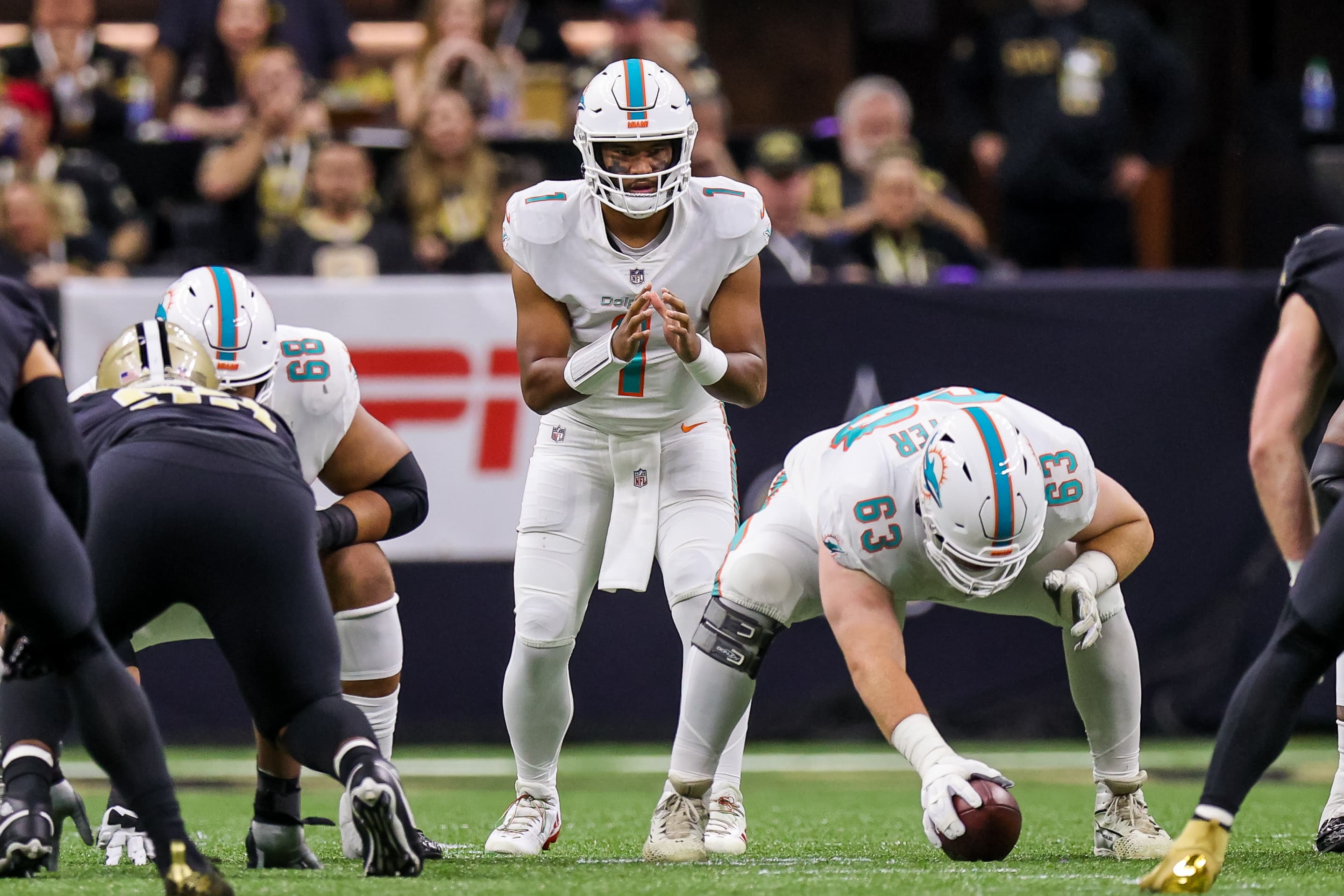
Kevin Stefanski said out loud on Monday what the orthopedic literature has been saying for years: the test that clears a knee was never designed to measure whether a quarterback can play. Here is what it actually measures, what it structurally cannot, and what Atlanta is really giving up by making the eighth pick of the 2024 draft inactive.
The Rescue Quarterback Is Already on the Roster
The loudest demand in Atlanta on Monday was for somebody to go get a quarterback. He is already on the roster, he cost the eighth pick in the draft, and he spent Monday saying out loud that he is not ready yet.

The Blind Side Doesn't Move
By the national count, Pittsburgh is the last team in the NFL that does not know which quarterback it will see on Sunday. It matters less than a week of coverage has implied, because Michael Penix Jr. and Tua Tagovailoa throw with the same hand.