 Photo by Jsayre64, CC BY-SA 4.0, via Wikimedia Commons
The Rotation That Repairs Itself
The Braves sent a 3.74 ERA starter to the bullpen this week. Not because they had to — because they could.
Ninety-three-point-nine miles per hour. That is the average velocity on Reynaldo López's four-seam fastball this season — down from 95.5 during his All-Star campaign in 2024, a decline of 1.6 miles per hour that most fans would never notice and that the opposing batting order has noticed completely. His slider, the pitch that made him a Cy Young runner-up, has seen its whiff rate drop by more than eleven percentage points. The wOBA against it has ballooned from .220 to .440 — which, for those keeping score, means a pitch that was once unhittable is now one of the most hittable breaking balls in the National League.
So the Braves moved López to the bullpen. Walt Weiss described it as a chance to "work out some mechanical issues" and clarified that the organization still sees him as a starter. This is the kind of sentence that gets parsed seventeen different ways on talk radio, but the math is simpler than the interpretation: the Braves are 21-9, owners of the best record in baseball, and they have five starters with ERAs under 4.00 who are not named Reynaldo López. You only send a man to the shop when you have another car in the driveway.
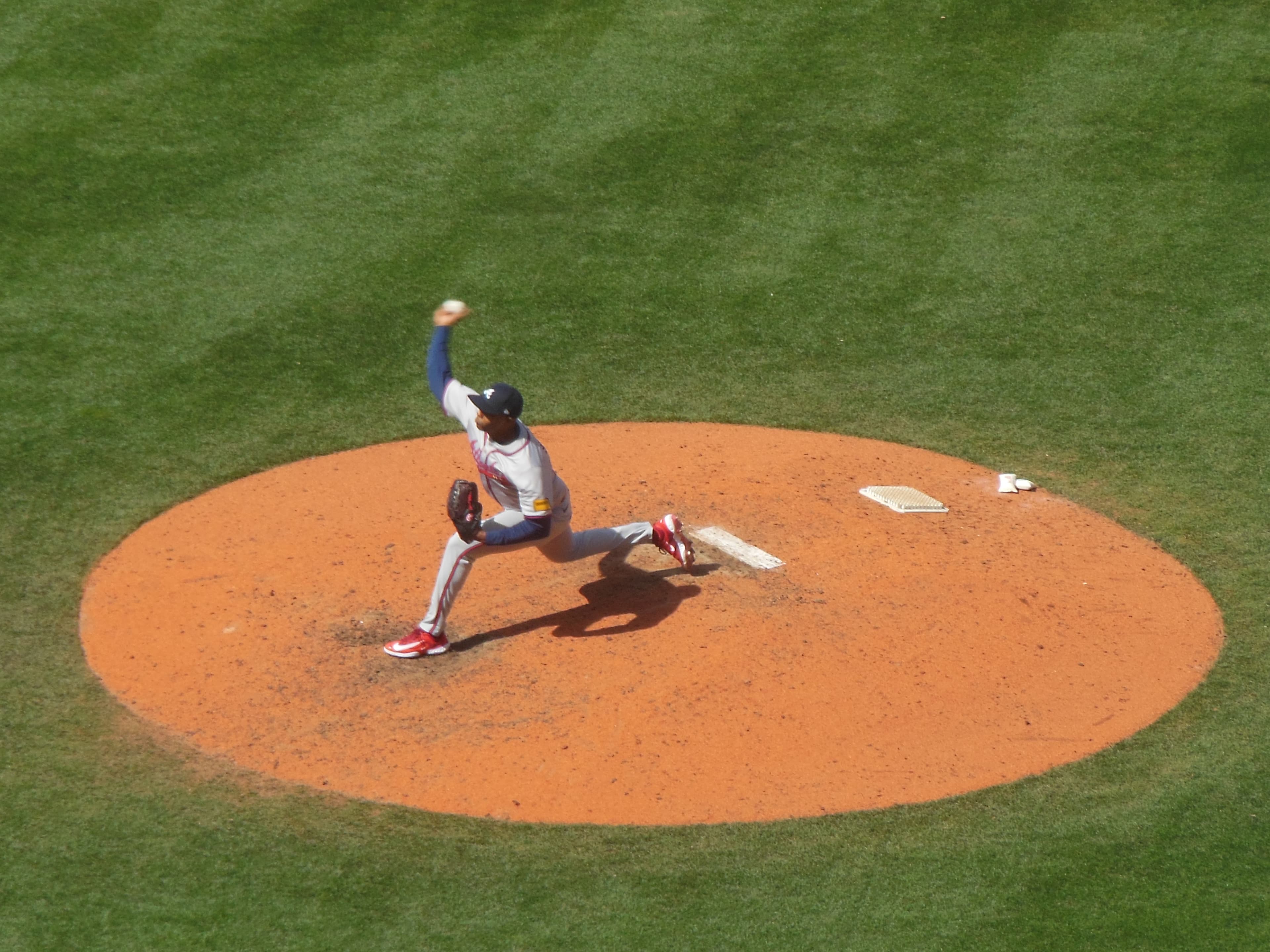
The car in the driveway, tonight, is JR Ritchie.
Six days ago, at Nationals Park, Ritchie threw the first pitch of his major-league career — a 93.5 mph fastball that James Wood deposited into the right-field seats. Most 22-year-olds would need an inning to recover from that. Ritchie needed one pitch. He settled into a seven-inning line that read like a blueprint: 5 hits, 2 earned runs, 7 strikeouts, 89 pitches. CJ Abrams added a solo homer in the fourth. Everything else belonged to Ritchie and a curveball that generated whiffs on roughly half its offerings.
The Braves' No. 2 prospect, drafted 35th overall in 2022, had missed more than a year to Tommy John surgery. He was 19 when the ligament tore. He is 22 now, and tonight he makes his Truist Park debut against Detroit — a second start, a second lineup, the second data point in what the organization hopes is a very long dataset.
I wrote after the debut that efficiency ages better than dominance. That thesis gets its first retest tonight. The league adjusts. The question is whether Ritchie adjusts back.
The broader question, though, is not about any single arm. It is about what kind of team does this.
Twenty-six days ago, I wrote a piece called "Four Arms and a Prayer" about a rotation that had four pitchers on the injured list and was running on Sale, a journeyman, and faith. The Braves were 4-2 and it felt precarious. Now they are 21-9, their rotation leads the National League with a 2.84 ERA, their team ERA of 3.09 is the best in baseball, and their most notable pitching decision of the week is a voluntary demotion.
Consider the active five: Sale at 2.31. Elder at 1.95. Holmes at 3.62. Ritchie at 2.57 in his lone start. Pérez at 2.22. That is five starters, none with an ERA above 3.62, on a staff that just sent its sixth option to the bullpen not because he was bad — a 3.74 ERA is perfectly serviceable — but because the underlying data said the arm was trending wrong, and the depth said the team could afford to fix it before it broke.
This is how 21-9 teams manage pitching. They do not patch cracks. They prevent them.
And then there is the figure at the edge of the frame.
Spencer Strider has made three rehab starts — 12.2 innings, 18 strikeouts, a 1.42 ERA, and a fastball that has topped 96.9 mph. His most recent outing, Sunday at Gwinnett, was his sharpest: 4.1 innings, 1 hit, 8 strikeouts, zero earned runs. Weiss says the return will come either this weekend in Colorado or the following series against Seattle. "Series to series," he said, which is the managerial dialect for we're being careful because we can afford to be careful.
I have tracked Strider's velocity arc since spring training. In March, I wrote that the Braves go exactly as far as Strider's arm takes them. I still believe that. But the context has shifted in a way I did not fully anticipate: his return does not rescue a fragile rotation. It adds a front-of-rotation arm to a staff that already leads the major leagues in ERA. The prediction I made on April 15 — that if Elder maintained an ERA under 2.50 through April, the Braves would have rotation depth as a genuine advantage rather than a managed risk — has been validated. Elder sits at 1.95. López's demotion was the proof.
And behind Strider, two more arms are growing back. Spencer Schwellenbach and Hurston Waldrep, both on the 60-day IL after elbow surgery, could return in June. If they do, the Braves will have eight or nine viable starting pitchers competing for five spots. That is not depth. That is regeneration.
The NL East, meanwhile, offers no resistance. The Phillies and Mets are both 10-19, ten and a half games behind a team they were supposed to compete with. Miami sits at 14-16. Washington at 13-17. The Braves' seven-game lead over the nearest competitor is the largest division margin in baseball, and they have built it with a rotation that treats its own repairs as luxury projects rather than emergencies.
López's slider will come back or it won't. His velocity will recover or it will settle at a new baseline. But the Braves have built something that does not depend on any single answer. A rotation that can lose its second-best starter to a voluntary mechanical tune-up, debut a 22-year-old who threw seven innings in his first career start, and wait patiently for a 96-mph fastball to arrive from Gwinnett — that is not a pitching staff managing a crisis. That is a pitching staff that has moved past crisis entirely, into something more interesting.
A system that repairs itself. The season is long, and the arms keep arriving.
The Tilt
The Braves shelved their Cy Young runner-up because they could. That is what 21-9 looks like.
— Ellis Magnolia
What's your take?
Keep Reading
October Has Two Off Days
I wrote yesterday that October asks a club who its best three starters are. The published 2026 calendar says the number is four, and Atlanta are carrying six arms with 17 games left to sort them.
Lopez Is Not Tonight's Problem
Everybody is about to tell you the Braves are gambling on an arm that has not pitched since July. The pitch count says otherwise, and it points at something worse.
_15.jpg&w=3840&q=75)
Somebody Has to Take the Turn
Atlanta went to a six-man rotation to keep five arms fresh for October. On the first night of nine straight games, the sixth man got ten outs, the staff gave up four home runs, and the bullpen covered the rest.