 Unsplash
The Falcons' Draft Starts at 48. The Scheme Decides What It Means.
Jeff Ulbrich's defense ran man coverage on 32.5% of defensive snaps last season, nearly double the 16.4% rate under the previous staff. That single number reshapes every conversation about what the Falcons should do at pick 48 on Friday night.
Jeff Ulbrich's defense ran man coverage on 32.5% of defensive snaps last season, nearly double the 16.4% rate under the previous coaching staff. That single number reshapes every conversation about what the Falcons should do at pick 48 on Friday night.
Man coverage demands a different species of defender. Zone lets linebackers pattern-read and rally. Man asks them to run with tight ends and running backs in open space, to mirror route stems instead of sitting in windows. The Falcons lost the one linebacker who could do all of it when Kaden Elliss signed a three-year, $33 million deal with the Saints. Ulbrich himself said replacing Elliss would take "more than one human being." That was not modesty. That was a diagnostic.
Christian Harris and Channing Tindall are the partial replacements. Partial is doing a lot of work in that sentence.
The interior was gutted alongside the linebacker room. David Onyemata left for the Jets. Cunningham swapped Ruke Orhorhoro for Maason Smith in a DT-for-DT trade with Jacksonville that clarified the regime's criteria without actually solving the problem. Smith is 23 years old and carries scheme-fit upside, but seven career starts and 3.5 career sacks are a projection, not a foundation. The run defense allowed 4.6 yards per carry last season, 25th in the NFL. That number does not fix itself because you traded one second-round pick for another.
This is the context that makes pick 48 the most consequential selection any Falcons GM has made since the Julio Jones trade-up in 2011 — not because the player will be that caliber, but because the margin is that thin. Five picks. No first-rounder. The one that was supposed to be here went to the Rams last April so that the previous regime could draft James Pearce Jr. at number 26. Pearce set a franchise modern-era record with 10.5 sacks as a rookie. He is now facing three felony charges and a minimum six-game suspension under the league's personal conduct policy. The capital that bought him is gone. The production he provided is in legal limbo. That is the inheritance Cunningham is drafting from.
So: defensive tackle or wide receiver at 48?
The mock draft industry has been arguing about this for weeks. Mel Kiper puts Lee Hunter from Texas Tech in Atlanta's lap — 6-4, 325 pounds, with 52 run stops and 33.5 tackles for loss over three seasons. ESPN's Matt Miller sends Christen Miller from Georgia, a local product who had a Top 30 visit and has been "heavily linked" to the Falcons in ESPN's pre-draft intel. The defensive tackle case is straightforward: the run defense was atrocious, the departures made it worse, and the scheme requires interior disruption to let the edge rushers finish.
But wide receiver has "routinely popped into conversation as a priority position," per ESPN's draft intel. Behind Drake London, the receiving corps consists of Jahan Dotson and Olamide Zaccheaus — neither of whom has ever hit the 550-yard mark in the NFL. The Falcons reportedly want a field stretcher for Day 2, someone who can take the lid off the defense and create the kind of vertical spacing that makes Stefanski's play-action concepts lethal. Zachariah Branch from Georgia — 5-10, 180, with 78% of his 811 yards coming after the catch — fits the profile if you trust the twitchiness over the frame.
Here is what the scheme actually tells you, though.
Stefanski's offense operates on play-action efficiency. The quarterback fakes the handoff, the offensive line sells the run, and the route concepts attack the second level of the defense while linebackers are frozen. That system works when the defense respects the run. If the run game stalls because opponents are stuffing Bijan Robinson at the line — and Robinson gained 2,298 scrimmage yards last season behind an interior offensive line that Bill Callahan is now coaching — then the play-action loses its teeth. The run defense is not just the defense's problem. A porous front destroys the offensive chain reaction, too.
Cunningham was shaped by the Ozzie Newsome tree in Baltimore, and the Ravens philosophy can be summarized in five words: accumulate picks, take the best player available. He has said as much — best player available, full stop, let the board dictate. In 2022, when Cunningham was in Chicago, the Bears entered the draft with six picks and left with 11 after multiple trades back. He is on record saying this roster will not have this few picks again. The instinct is to slide back from 48, accumulate assets, and take more swings.
But the trade chart analysis from earlier this week showed why that is harder than it sounds. Pick 48 sits in the range where the value curve flattens — the return on trading back gets thinner, and the talent drop-off gets steeper. Cunningham may not have the leverage to turn five picks into eight without surrendering real value at the top of his board.
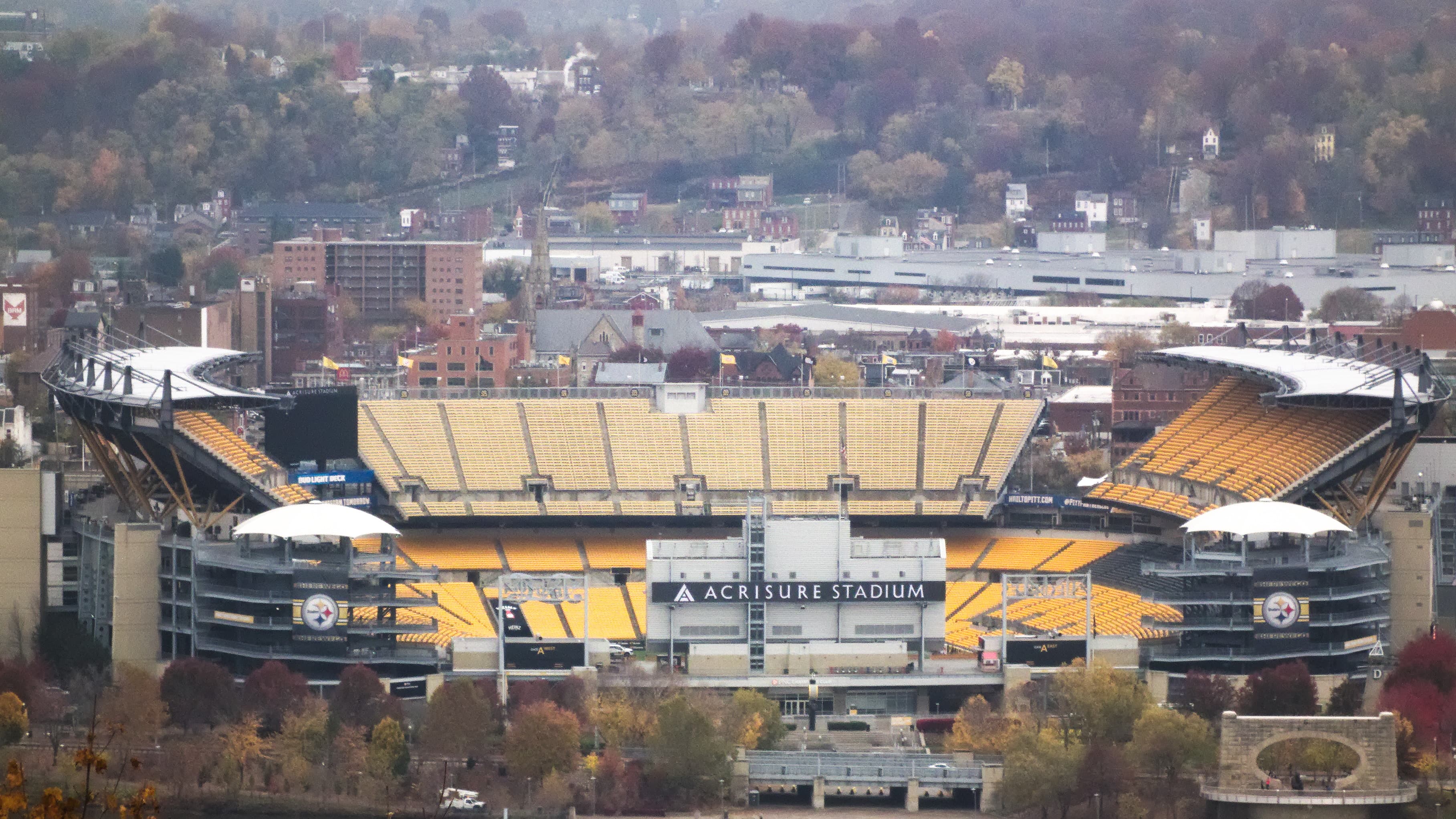
Which means Friday night at 7 PM, when Michael Turner walks to the podium in Pittsburgh to announce the selection, Cunningham will likely be making his pick at 48 and living with it. The Ulbrich scheme says that pick should be a defensive tackle who can collapse the pocket from the interior and anchor against the run — a player who makes the man-coverage philosophy viable by ensuring opposing offenses cannot simply run through Atlanta's front. The offensive need says the pick should be a receiver who unlocks the vertical dimension of a play-action system that currently has no deep threat behind London.
Both arguments are legitimate. But the run defense was 25th. The linebacker room lost its best player. The defensive tackle room has been reshuffled, not reinforced. Ulbrich's scheme asks more of the front seven than the previous defense did, and the front seven is objectively thinner than it was a year ago.
The board will speak Friday night. Cunningham says he will listen to it. But when a defense ranks 25th against the run and your coordinator runs man coverage at double the previous rate, the board and the scheme tend to point in the same direction.
Three days. Five picks. The regime's first exam is also, functionally, its hardest.
The Tilt
Ulbrich's man-coverage rate already answered the DT-or-WR question at 48.
— Miles Grady
What's your take?
Keep Reading
The Test Is Built to Say Yes
Kevin Stefanski said out loud on Monday what the orthopedic literature has been saying for years: the test that clears a knee was never designed to measure whether a quarterback can play. Here is what it actually measures, what it structurally cannot, and what Atlanta is really giving up by making the eighth pick of the 2024 draft inactive.
The Rescue Quarterback Is Already on the Roster
The loudest demand in Atlanta on Monday was for somebody to go get a quarterback. He is already on the roster, he cost the eighth pick in the draft, and he spent Monday saying out loud that he is not ready yet.
The Blind Side Doesn't Move
By the national count, Pittsburgh is the last team in the NFL that does not know which quarterback it will see on Sunday. It matters less than a week of coverage has implied, because Michael Penix Jr. and Tua Tagovailoa throw with the same hand.