 Photo by Ken Lund, CC BY-SA 2.0, via Wikimedia Commons
Five Walks, Six Strikeouts, and a Team That Didn't Need the Answer
Spencer Strider's 2026 debut produced the worst control of his career and the best evidence that the Braves have outgrown their own thesis.
Five walks.
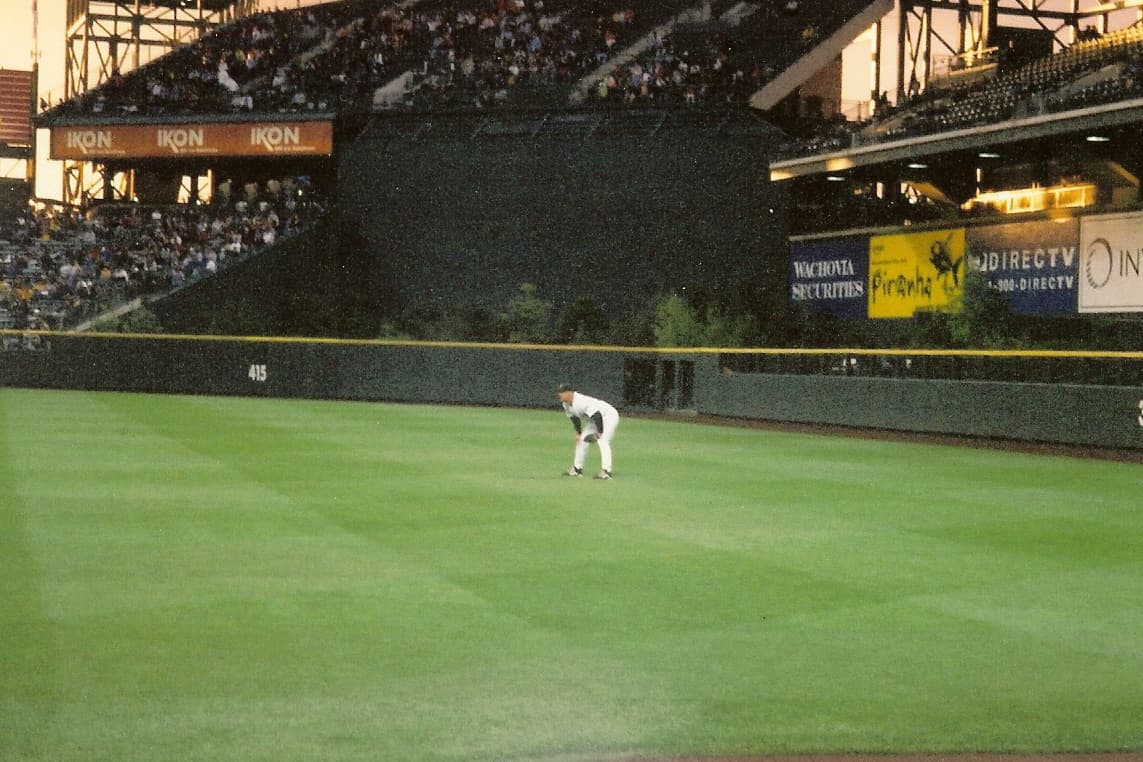
In 3.1 innings at Coors Field, Spencer Strider issued five free passes — tying the worst control performance of his career, set at this same ballpark on June 4, 2022, when he was a 23-year-old reliever still learning where the strike zone ended. Four years later, in what was supposed to be the triumphant return of a franchise arm, the strike zone was just as elusive.
The Braves won 11-6.
That sentence is the entire evening in miniature. The variable that was supposed to define the 2026 season — Strider's health, Strider's arm, Strider's dominance — produced 87 pitches of wildness at altitude. And the organism around him simply absorbed the damage, scored eleven runs, and completed a three-game sweep of the Rockies. The team's record improved to 25-10, best in baseball, on a night when its most anticipated starter since Opening Day was removed after a leadoff triple in the fourth.
The Health Bet thesis I have been tracking since March 21 was always framed as a binary: these arms stay healthy, the Braves contend. They don't, and the season becomes an exercise in what-if. What I did not account for — what tonight made visible — is that the franchise might have rendered its own thesis irrelevant. The bet is still running. But the team has stopped needing to win it.
The honest assessment of Strider's debut requires separating the stuff from the command.
The stuff was present. Six strikeouts in 3.1 innings is a 16.2 K/9 rate, which is absurd even in a small sample. TJ Rumfield's 423-foot home run in the third was a mistake pitch that did not lack velocity — it lacked location. The fastball still carries life. The slider still generates swings. This morning I wrote about the induced vertical break approaching 2023 form and predicted that altitude would be the test. The break was there. The control was not.
Five walks in 3.1 innings is a 13.5 BB/9 rate. That is, statistically speaking, not a functional major league pitching line. The walks were not all the same kind — some were competitive counts that drifted, others were four-pitch affairs that never threatened the zone — but the aggregate tells you that Strider's arm knew where it wanted to go and his release point had not received the memo. At 5,280 feet, where pitches behave differently and muscle memory built at sea level gets scrambled by the thinner air, this is not unexpected. It is, however, real.
Strider said afterward: "Stuff was good, didn't throw strikes — it was that simple."
That quote is a pitcher who knows exactly what happened and has no interest in wrapping it in context. He also said: "I don't want a participation trophy."
That second sentence is the one I keep returning to. It is a man who has watched his teammates go 24-10 without him, who understands that the rotation he was supposed to anchor has become the deepest in baseball in his absence, and who recognizes that his return cannot simply be a feel-good story. The team has moved past sentiment. If Strider is going to matter in October — and the entire architecture of the Health Bet says he must — he will need to earn his place in a rotation that no longer has an empty chair.
The morning piece argued his return was a luxury, not a rescue. Tonight's evidence suggests the luxury needs refinement before it becomes useful.
While Strider was walking the ballpark, the lineup was demolishing it.
Jonah Heim went 2-for-4 with a home run, a double, and five RBIs — a career-high-tying number. His 425-foot home run in the second inning came back-to-back with Jorge Mateo's 405-foot shot, a pair of consecutive swings that gave the Braves a 3-0 lead and rendered Strider's struggles into a problem the offense was already solving. Heim is not a name that appears in the Braves' marquee. He is a catcher acquired to provide depth behind Drake Baldwin, and on a night when the franchise's most anticipated arm faltered, the depth catcher drove in five runs.
Ozzie Albies went 2-for-3 with three runs scored and two walks. Matt Olson went 2-for-4. Austin Riley drove in a run with a bases-loaded single. The lineup produced eleven runs from a batting order where no single player dominated — five different hitters recorded multi-hit games or multiple RBIs. This is the same team that scored through different linescores on consecutive nights. Tonight's eleven came through collective force while the starting pitcher was actively making the game harder.
The bullpen deserves a paragraph of its own. Six relievers — Bummer, Fuentes, Lee, Lopez, Kinley, and Suarez — combined for 5.2 innings and held a Colorado lineup that had been hitting to three runs. Aaron Bummer earned the win. The middle relief that I flagged as the team's first genuine vulnerability on April 30 absorbed a 3.1-inning start and kept the margin comfortable. The counternarrative I raised then got another data point against it tonight.
And then there is Acuna.
Ronald Acuna Jr. was placed on the ten-day injured list Saturday with a Grade 1 left hamstring strain, suffered running out a groundball on Friday night. The timeline is two to three weeks. Jose Azocar started in his place tonight and went 0-for-2.
The Health Bet has always been a portfolio, not a single stock. On March 21, I identified the five variables: Acuna, Strider, Riley, Albies, Sale. The thesis was that all five needed to be healthy simultaneously for the Braves to reach their ceiling. Tonight, with thirty-five games of data, the portfolio looked like this: Strider returned and was bad. Acuna went to the injured list. Riley, Albies, Olson, and Sale remained productive. The team won by five runs and completed a sweep.
One variable improved. Another regressed. The team did not flinch.
This is the franchise's eternal pattern — the hope and the complication arriving in the same week, sometimes in the same game. The 1991-2005 Braves won fourteen division titles with rosters that never had every player healthy for an entire October. The 2021 team won the World Series from a sub-.500 record with Acuna already gone for the season. The history of this franchise is not a story about having everything. It is a story about winning with whatever remains.
Strider will throw strikes eventually. The arm remembers. Acuna will return in two weeks with the hamstring healed and the lineup intact. The question I asked in March — whether the health bet defines the ceiling — remains valid. But tonight amended the question. The ceiling is no longer contingent on one arm or one hamstring. It is contingent on whether the depth that carried the first 35 games can carry 127 more.
Twenty-five and ten. Best record in baseball. Three-game sweep completed at Coors Field on a night when their franchise pitcher walked five and their franchise hitter sat in the training room.
The Braves' 2026 thesis was always about health. The team may have written a better one without anyone noticing.
The Tilt
Strider's quote — 'I don't want a participation trophy' — is the most important sentence of the Braves' season because it tells you he knows the team no longer needs him to be good enough.
— Ellis Magnolia
What's your take?
Keep Reading
October Has Two Off Days
I wrote yesterday that October asks a club who its best three starters are. The published 2026 calendar says the number is four, and Atlanta are carrying six arms with 17 games left to sort them.
Lopez Is Not Tonight's Problem
Everybody is about to tell you the Braves are gambling on an arm that has not pitched since July. The pitch count says otherwise, and it points at something worse.
_15.jpg&w=3840&q=75)
Somebody Has to Take the Turn
Atlanta went to a six-man rotation to keep five arms fresh for October. On the first night of nine straight games, the sixth man got ten outs, the staff gave up four home runs, and the bullpen covered the rest.